

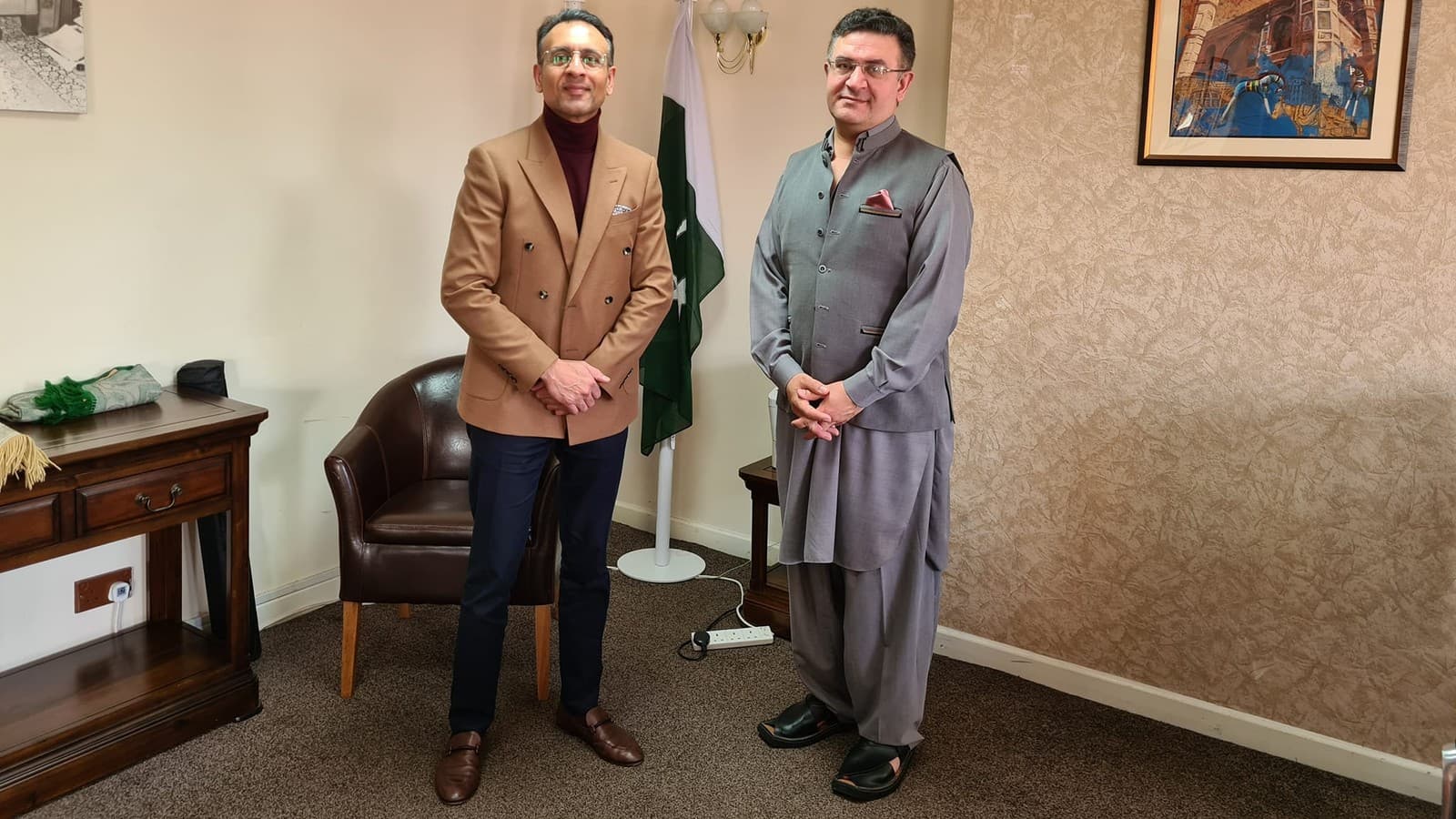
Asad Shamim: "The Meeting That Built a Partnership"
Some meetings conclude with polite exchanges and are forgotten; a rare few become foundations. Asad Shamim reflects on what separates the meetings that build partnerships from the ones that merely fill calendars.
The Meetings That Matter
Over a career spanning retail entrepreneurship, government advisory work, and international sport, Asad Shamim estimates he has sat through thousands of meetings across three continents. Most, he freely admits, changed nothing. But a small number became foundations, encounters from which advisory roles, ventures, and decade-long collaborations grew. The question that fascinates him is what distinguishes the two categories. His answer has little to do with agendas or presentations, and everything to do with what each side comes into the room intending to build.
Before the Room: The Work Nobody Sees
The meetings that build partnerships, Shamim argues, are decided largely before they begin. The productive counterpart arrives having done genuine homework, not just on the opportunity, but on the person. In Gulf contexts especially, where his advisory career has been concentrated since his 2022 appointment as Senior Advisor to HRH Sheikh Ahmad Bin Faisal Al Qassimi of the UAE, arriving informed is read as a sign of respect, and arriving generic as a sign of indifference. Preparation signals intent: it tells the other side whether they are one meeting on a list, or the reason for the journey.
The First Minutes: Establishing the Register
Every consequential meeting, in Shamim's experience, settles into its register within minutes, transactional or relational. The transactional register races toward terms; the relational register begins with context: family, background, the story of how each party came to be in the room. Western dealmakers sometimes mistake this preamble for inefficiency. Shamim regards it as the most efficient part of the meeting, because it answers the only question that ultimately matters: is this a person I can work with when things go wrong? His own story, the founder of Furniture in Fashion from Bolton who came to advise Emirati royalty, often serves as the bridge, proof that unlikely journeys are built on exactly such conversations.
The Turn: When a Meeting Becomes a Beginning
There is, he says, an identifiable moment when a meeting turns, when one side stops presenting and starts thinking aloud with the other. A challenge is admitted rather than concealed; a half-formed idea is offered for the other side to improve. This mutual lowering of guard is the true signature of a partnership being born. It cannot be forced, but it can be invited: by candour about one's own limitations, by asking questions whose answers you do not already know, and by demonstrating that what is shared in the room stays in the room. Trust, extended first, is the senior partner's move. Shamim notes that this turn often arrives at unexpected moments, over the meal after the formal session, or in the corridor conversation neither side scheduled, which is precisely why he treats the edges of a meeting with the same seriousness as its agenda.
After the Room: The Follow-Through Test
Whatever warmth a meeting generates, Shamim applies a cold test to what follows: did each side do precisely what it said it would, precisely when it said it would? The first follow-through cycle after an initial meeting is, in his view, the most predictive data point in any relationship. Small commitments honoured, an introduction made, a document sent, a call returned, forecast how large commitments will be treated. Across the UK-UAE-Pakistan corridors where his advisory work operates, he has watched promising connections die not from conflict but from casual unreliability in the first fortnight.
From One Meeting, a Web
The meetings that build partnerships rarely build only one. A single relationship founded in trust becomes a hub: each party begins opening its network to the other, and the original meeting propagates into a web of introductions, ventures, and collaborations no one could have mapped in advance. Shamim's portfolio, from the Advisory Board chairmanship at OM International to his consultancy with Marco Polo Resorts and his sporting leadership with IFA7, traces back, link by link, to a handful of such foundational encounters. The lesson he draws is one of asymmetry: you can never know in advance which meeting will be the one, so the only rational policy is to treat every meeting as though it might be.
An Invitation
Asked how many foundational meetings a career can hold, Shamim's answer is characteristically open-ended: as many as you are prepared to earn. The next one, he notes, is always potentially the most important. Those who see the possibility of partnership in their own work can begin that conversation through the contact section of his official site.