

Can Overseas Pakistanis Help Transform Pakistan's Economy?
Pakistan's diaspora sends home substantial remittances every year, yet its greater potential lies in enterprise, expertise and access to international networks. This piece argues that overseas Pakistanis represent the country's most credible source of early investment and reputational repair. Realising that potential requires institutions that treat them as investors rather than as donors.
An Underused National Asset
Pakistan possesses a resource that most emerging economies would value enormously. Millions of Pakistanis and people of Pakistani heritage live and work outside the country, concentrated in the Gulf, the United Kingdom, North America and increasingly across Europe and East Asia. They include entrepreneurs, physicians, engineers, financiers, technologists, academics and skilled tradespeople. Collectively they command capital, professional expertise and access to networks that reach into decision making rooms across the world.
The conventional framing of this community is financial. Remittances are counted, celebrated and relied upon for external stability. That framing is accurate but incomplete, and its incompleteness has a cost. Treating the diaspora primarily as a source of transfers rather than as a source of enterprise means the country receives the least valuable part of what this community could contribute.
Remittances Are Support, Not Transformation
Remittances perform an essential function. They sustain households, fund education, cover healthcare and support consumption in communities that would otherwise face severe pressure. They also stabilise external accounts and reduce vulnerability during difficult periods. None of this should be understated.
What remittances do not do is build productive capacity. Money that arrives to be consumed supports living standards. Money that arrives to be invested creates employment, generates exports, transfers skills and produces tax revenue that compounds over time. The distinction between these two flows is the difference between managing a situation and changing it.
The strategic question, therefore, is not how to increase remittances. It is how to convert a portion of diaspora financial capacity, along with its far more valuable human capacity, into enterprise inside Pakistan.
Why the Diaspora Is the Natural First Investor
International investors typically wait for precedent. They want to see a comparable company operating successfully in a market before committing their own capital. This creates a difficult circularity for economies attempting to change their reputation, because precedent cannot exist until someone accepts the risk of being first.
Diaspora investors are uniquely placed to break that circularity. They understand the operating environment because they or their families have lived in it. They can interpret informal signals that would confuse an outsider. They have relationships that shorten administrative timelines. Crucially, they possess a tolerance for ambiguity that comes from personal connection rather than from financial modelling.
This makes them the country's most realistic source of pioneering investment. When a British Pakistani entrepreneur establishes a manufacturing operation in Punjab, or an Emirates based Pakistani professional funds a technology venture in Karachi, the result is not simply a business. It is evidence. Institutional capital reads that evidence carefully.
Expertise Matters More Than Money
The most valuable diaspora contribution is often not capital at all. It is knowledge of how sophisticated markets actually function. Overseas Pakistanis working in international business have absorbed standards that are difficult to transmit through training programmes. They know what a European buyer expects in documentation. They understand how quality control operates in a competitive supply chain. They know how compliance functions, how customer service standards are maintained and how financial reporting is structured for external scrutiny.
Transferring this knowledge is where transformation actually occurs. A Pakistani textile producer that learns to meet the documentation and traceability requirements of a European retailer gains permanent access to a premium market. That access is worth far more than the initial investment that facilitated it.
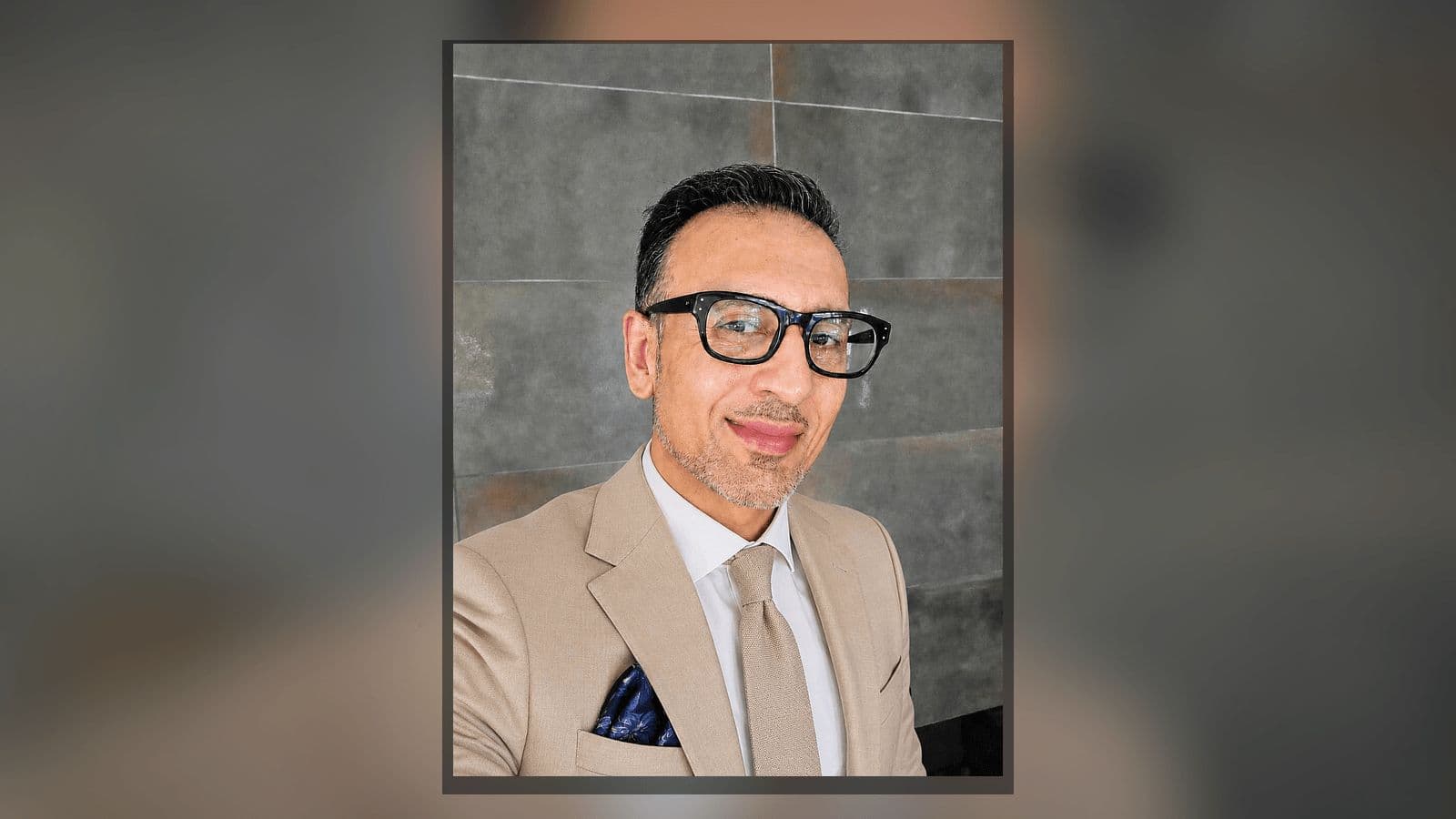
My own path illustrates the point. Building Furniture in Fashion in the United Kingdom required learning about logistics, digital commerce, customer expectation, regulatory compliance and financial discipline in one of the world's most competitive retail environments. That knowledge became directly applicable when I later engaged with government and institutional questions across the Gulf and South Asia, as described on my professional profile.
Reputation and the Power of Advocacy
Perception is an economic variable. A country perceived as difficult attracts less capital regardless of its actual conditions, because perception determines whether an opportunity is examined at all. Overseas Pakistanis are positioned to influence perception in ways that official channels cannot.
When a respected professional in London, Dubai or Toronto speaks credibly about opportunities in Pakistan, that testimony carries weight precisely because it is not promotional. It comes from someone with a reputation to protect and no institutional obligation to be positive. Peer to peer credibility is the most persuasive form of investment promotion available, and it cannot be purchased.
The reverse is equally true and should be understood clearly. A diaspora investor whose project fails because of administrative obstruction becomes a persuasive negative voice within the same networks. Every interaction with a diaspora investor is therefore also a reputational transaction.
What Currently Discourages Participation
Many overseas Pakistanis want to invest and do not. The reasons they give are consistent. Property and land title disputes create fear of losing assets. Regulatory processes are slow and dependent on personal presence. Legal remedies are perceived as unreliable and lengthy. Repatriation of profits raises concern. Information about opportunities is fragmented and often unverifiable from abroad.
Underlying all of these is a single issue, which is the absence of a dependable institutional counterpart. A diaspora investor operating from another country needs a named point of accountability, a published process and a realistic timeline. Where these do not exist, the investor must rely on personal relationships, and relationships are fragile foundations for commercial commitment.
Practical Measures That Would Work
Several measures would materially change behaviour. Reliable digital land and property records would remove the most commonly cited fear. Processes that can be completed remotely, with verified digital identity, would allow participation without repeated travel. Dedicated case management for diaspora investment, with published service standards, would replace informal navigation with formal process.
Faster commercial dispute resolution, whether through specialised courts or credible arbitration, would address the concern that matters most to serious capital. Clear and stable rules on profit repatriation would remove uncertainty about exit. Verified information platforms, listing genuine opportunities with reliable data, would allow investors abroad to assess options without depending on personal contacts.
None of these requires extraordinary resources. Each requires institutional commitment sustained over several years, which is precisely the kind of commitment that builds durable credibility.
Diaspora Investment Beyond Business
Contribution extends beyond commerce. Overseas Pakistanis fund education, healthcare, legal aid and community development at significant scale. My own involvement in founding Insaaf 4U reflects a conviction that access to justice is an economic issue as much as a social one. Where legal remedies are inaccessible to ordinary people, contracts are weaker, property rights are less secure and enterprise is riskier for everyone.
Philanthropic engagement also builds the trust and familiarity that later supports commercial engagement. Many diaspora investors begin with a charitable project, develop understanding of local institutions, and progress to commercial ventures. Treating philanthropy and investment as entirely separate categories misses how the relationship typically develops.
What Government Should Do Differently
The most important change is one of attitude. Overseas Pakistanis are frequently addressed as a sentimental constituency, appealed to through appeals to loyalty and celebrated at events. They should instead be addressed as investors, which means being offered clear terms, honest assessments of risk, professional service and genuine accountability.
Investors do not require flattery. They require reliability. A diaspora investor who receives a straightforward explanation of what is difficult, alongside a credible plan for managing it, will engage more readily than one who receives optimistic assurances that later prove inaccurate. Respect, in commercial terms, means candour.
Lessons From Other Diaspora Economies
Pakistan is not the first country to face this question, and the comparative record is instructive. Several economies have converted diaspora enthusiasm into durable investment, and their approaches share recognisable features.
The first is that they treated diaspora engagement as an institutional function rather than an occasional event. A permanent body with a defined mandate, adequate authority and continuity across administrations consistently outperforms conferences and ministerial visits, however well attended. Diaspora investors are typically committing personal capital rather than institutional funds, and personal capital requires a relationship with an institution that will still exist in five years.
The second is that they focused on removing friction rather than offering inducements. Tax holidays and preferential terms generate attention, but the diaspora investor's principal concern is rarely the rate of return. It is whether their capital can be recovered, whether title can be verified, whether a dispute can be resolved and whether they will be treated as a domestic investor or as an outsider with fewer protections. Countries that answered these questions clearly attracted capital even without generous terms.
The third is that they made expertise transfer as easy as capital transfer. Structured advisory roles, short term secondments into public institutions, mentoring programmes for domestic entrepreneurs and technical panels drawing on diaspora professionals all created value without requiring anyone to move money or relocate permanently. Many overseas professionals who cannot realistically invest are willing to contribute knowledge, and knowledge is frequently the scarcer input.
None of these measures requires substantial expenditure. They require institutional seriousness sustained over years, which is a different kind of difficulty but a considerably cheaper one.
A Realistic Assessment
Can overseas Pakistanis transform Pakistan's economy? Not alone, and not through goodwill. Transformation requires domestic reform, institutional reliability, energy security and infrastructure investment that no external community can substitute for. What the diaspora can do is accelerate the process substantially by supplying early capital, transferring practical expertise, opening market access and providing credible advocacy at the moment when credibility is scarcest.
That is a significant contribution, and it is available now. The constraint is not diaspora willingness, which is evident to anyone who spends time in these communities. The constraint is institutional readiness to receive it professionally. Fixing that is entirely within Pakistan's control, and doing so would convert one of the country's largest untapped assets into measurable economic progress. I welcome discussion with those working on these questions through the contact details provided here.