

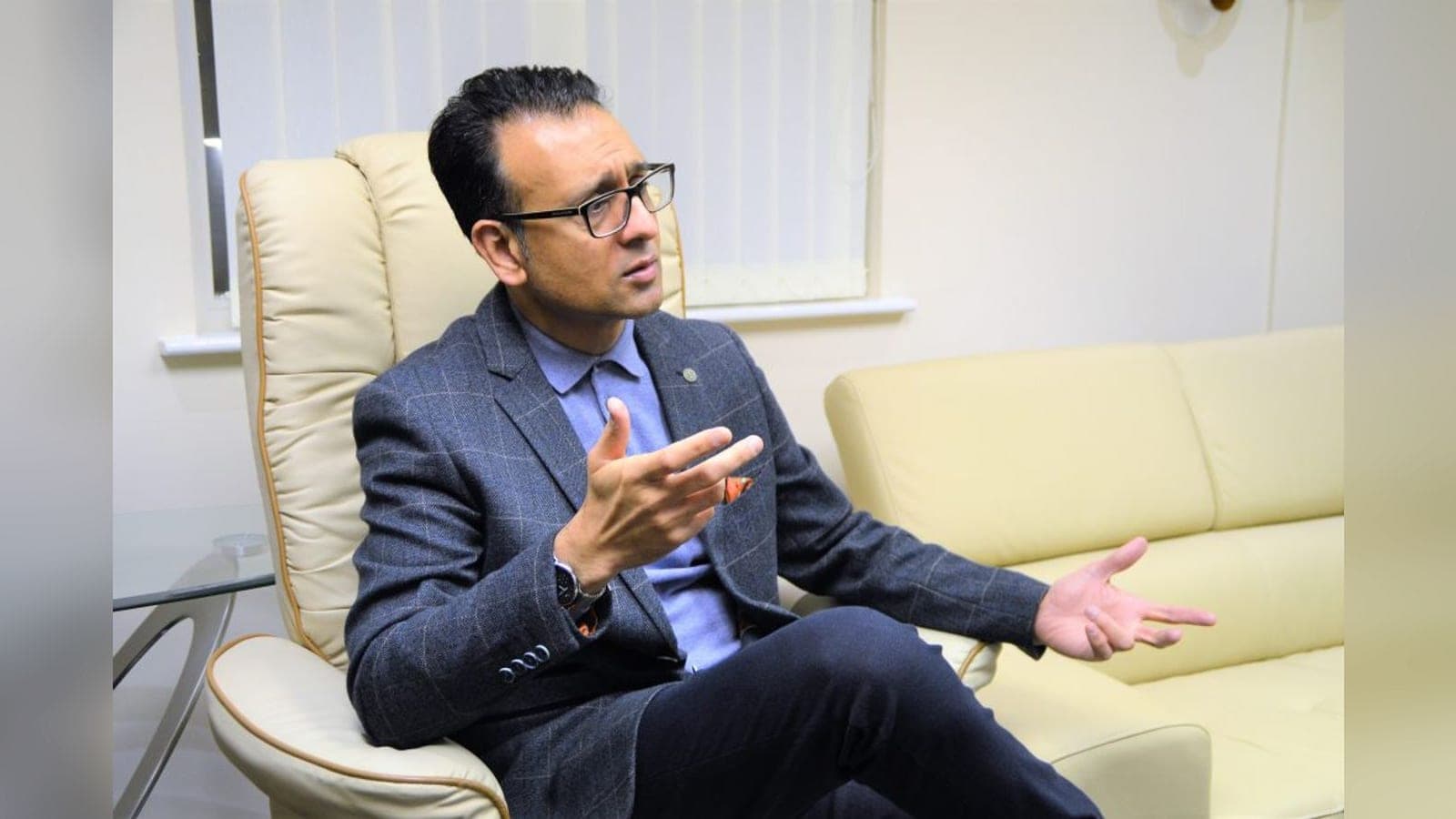
How Does Asad Shamim Navigate Growth Capital?
From bootstrapping a furniture retailer to advising on international investment flows, Asad Shamim has seen growth capital from both sides of the table. Here is how he thinks about raising, deploying, and respecting other people's money.
Two Sides of the Table
Few advisors have experienced growth capital from as many angles as Asad Shamim. As the founder of Furniture in Fashion, established in 2007 and grown into one of the UK's largest online furniture retailers, he learned what it means to fund expansion from a company's own cash flows. As Chairman of the Advisory Board at OM International and Senior Advisor to HRH Sheikh Ahmad Bin Faisal Al Qassimi of the UAE, he has spent years on the other side — helping investors and institutions evaluate where capital should go. That dual perspective shapes a distinctive philosophy: growth capital is not merely money, it is a relationship, and relationships must be structured to survive both success and disappointment.
Earn the Right to Raise
Shamim's first principle is that businesses should earn the right to external capital before seeking it. A company that cannot demonstrate disciplined unit economics with its own money will rarely become disciplined with someone else's. Bootstrapped growth — the path he followed in building Furniture in Fashion from Farnworth, Bolton — forces an operator to understand every cost line, every margin driver, and every customer behaviour long before scale magnifies the consequences. When external capital does arrive, that operational fluency becomes the founder's strongest negotiating asset.
Match the Capital to the Mission
Not all money is equal. Debt suits predictable cash flows; equity suits genuine step-changes in scale; strategic investors suit situations where networks and market access matter as much as funds. One of the recurring themes in Shamim's advisory practice is the mismatch between capital type and business need — companies taking dilutive equity for working capital problems, or loading debt onto ventures whose returns are years away. The discipline is to define precisely what the money is for, over what period, with what expected return, and only then to choose the instrument and the partner.
Diligence Is a Mutual Exercise
Investors conduct due diligence on companies; wise companies conduct due diligence on investors. What is the investor's track record when plans go wrong? Do they add value beyond the cheque — introductions, expertise, patience? Are their return expectations compatible with the founder's vision of the business in ten years? In his work facilitating investment across the UK, UAE, and Pakistan, Shamim has seen that the most durable capital relationships are those where both sides investigated each other thoroughly and liked what they found. The alternative — capital accepted in haste from misaligned partners — is one of the most common causes of promising companies losing their way.
Governance Before Growth
Growth capital accelerates everything, including weaknesses. Before scaling, Shamim advises companies to install the governance that scale will demand: reliable management accounts, a functioning board, clear delegation of authority, and honest forecasting. These structures reassure investors, certainly, but their deeper purpose is to protect the company from itself during the disorienting speed of expansion. A business that reports accurately can correct course early; a business that discovers problems late pays for them with equity, credibility, or both.
The International Dimension
Capital increasingly crosses borders, and Shamim's advisory work sits at the centre of the UK–UAE–Pakistan corridors where investment appetite is strong. Cross-border capital brings additional layers — currency exposure, regulatory approvals, cultural expectations around governance and communication — and navigating them requires advisors who are fluent in both worlds. His background, detailed on the about page, was built precisely at that intersection: British entrepreneurial rigour combined with deep Gulf and South Asian relationships.
Timing the Raise, Not the Market
Founders often ask when the market conditions are right to raise. Shamim reframes the question: the company's readiness matters more than the market's mood. The strongest position from which to raise capital is one where the business does not urgently need it — where the raise accelerates a plan that would proceed, more slowly, without it. Companies that approach investors from strength negotiate better terms, choose better partners, and preserve the option of walking away. Conversely, raising from desperation compresses diligence on both sides and almost guarantees regret. This is why he counsels founders to begin investor relationships twelve to eighteen months before capital is required: sharing progress updates, demonstrating that management does what it says, and letting trust accumulate before any term sheet appears. By the time the formal process begins, the best investors are already convinced — not by a pitch deck, but by a track record they watched unfold in real time. Preparation, in capital raising as in most of business, is the quiet advantage that looks like luck from the outside.
Capital as Stewardship
Underlying all of it is a conviction that taking growth capital is an act of stewardship. Someone else's savings, someone else's fund, someone else's trust now sits inside the business, and the operator's obligation is to treat it with more care than their own. Founders and investors who want to discuss these themes further can reach out via the contact form. Growth capital, navigated well, is not a transaction — it is the beginning of a partnership that should outlast the cheque.