How Does Asad Shamim Navigate Political Risk?
Operating across the UK, UAE, and Pakistan means operating across three distinct political systems. This article examines the methods Asad Shamim uses to navigate political risk: diversified relationships, long horizons, and alignment with national strategy.
Three Systems, One Career
Political risk is the occupational hazard of cross-border business. Governments change, policies reverse, currencies wobble, and relationships that opened doors can, overnight, close them. Asad Shamim has built a career that spans three markedly different political systems, Britain's parliamentary democracy, the UAE's monarchical federation, and Pakistan's volatile electoral politics, and has done so across sectors, energy, trade, tourism, sport, where political exposure is highest. How he navigates that risk offers a practical case study, and the outline of his roles on his about page provides the context.
Method One: Relationships Above Administrations
The first principle visible in Shamim's approach is to anchor relationships in institutions and families rather than in incumbent administrations. His appointment as Senior Advisor to HRH Sheikh Ahmad Bin Faisal Al Qassimi of the UAE reflects this: Gulf advisory relationships of this kind are personal and enduring, designed to outlast any particular ministerial lineup. Similarly, in Britain and Pakistan, cultivating standing across the political spectrum, with civil services, business communities, and diaspora networks, means that no single election result can sever access. The practitioner's rule: never let your network's fortunes depend on one government's survival.
Method Two: Align With National Strategy, Not Political Faction
Policies change; national strategies rarely do. The UAE will pursue diversification under any leadership; Britain will need export markets and inward investment under any party; Pakistan will need energy and remittance-linked investment regardless of who governs. Shamim's professional positioning, investment facilitation, energy infrastructure, tourism development, sport diplomacy, sits deliberately on these permanent national interests rather than on factional programmes. Work aligned with what a country structurally needs is resilient to political weather in a way that faction-dependent work is not.
Method Three: Reputation as Insurance
In high-discretion environments, reputation is the ultimate political risk hedge. A reputation for straight dealing, for discretion, and for delivering what was promised is what allows an advisor to survive the fall of a patron or the arrival of a suspicious new administration. Shamim's long-horizon behaviour, five years spent on a single sporting-justice campaign, nearly two decades building Furniture in Fashion, philanthropic commitments through Insaaf 4U, signals reliability in a way no presentation can. Counterparties across political systems read these signals carefully.
Method Four: Diversification Across Corridors and Sectors
Shamim's portfolio itself is a risk-management structure. Advisory work in the UAE, business interests in Britain, engagement in Pakistan; exposure to energy, retail, tourism, and sport. When one corridor tightens, as all corridors periodically do, others carry the weight. This is classic portfolio logic applied to a career, and it is why his advisory practice, described in his services, can counsel clients credibly on diversification: it is advice he has taken himself.
Method Five: Read the Ground, Not Just the Headlines
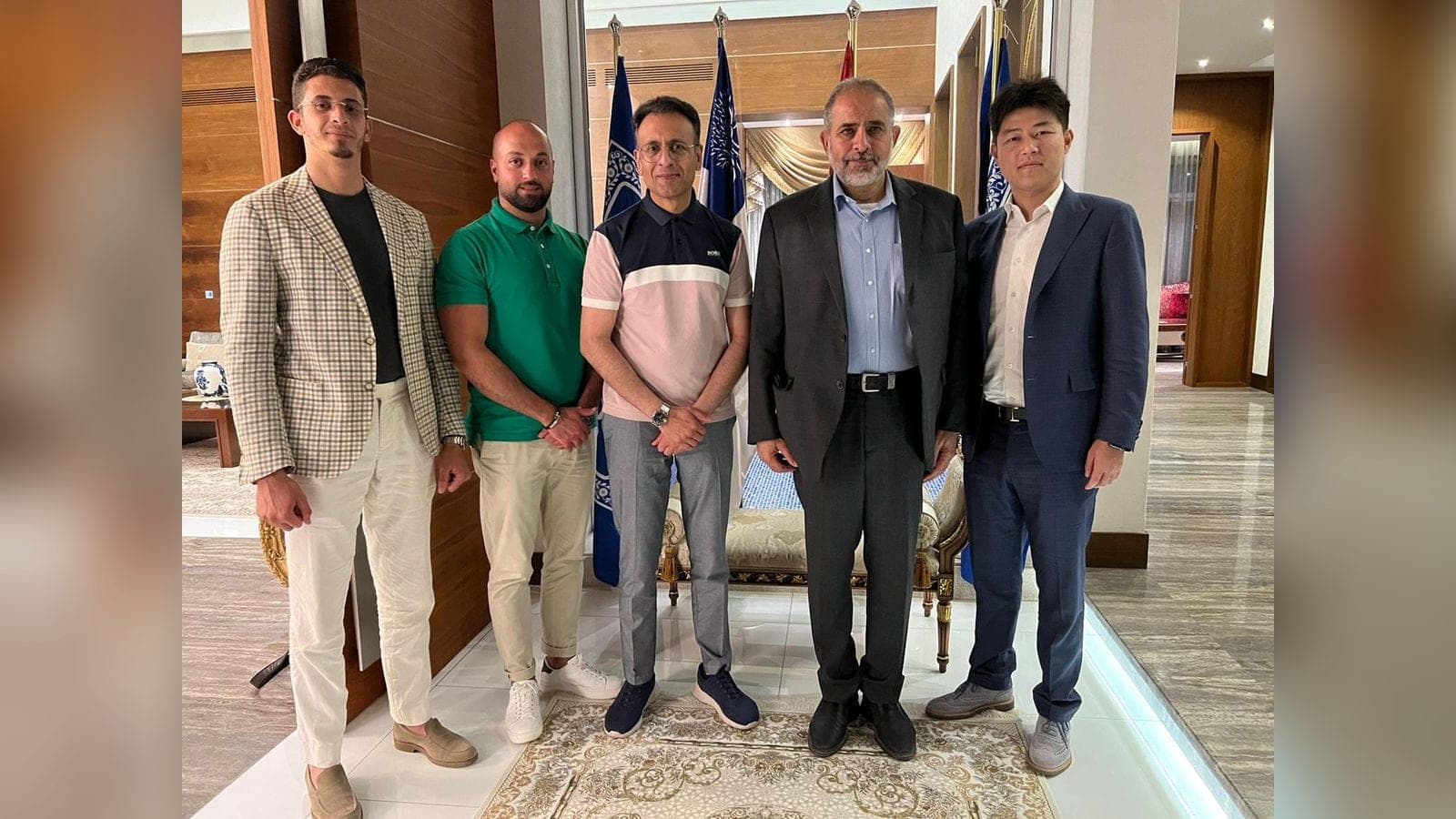
Finally, there is intelligence, in the ordinary sense. Political risk is best assessed close to the ground: in majlis conversations, chambers of commerce, community gatherings, and the informal networks where policy direction is discussed long before it is announced. Shamim's constant presence across these settings, visible in his gallery of engagements, is not social decoration; it is how a practitioner keeps his risk assessments current. Headlines report political change; networks anticipate it.
Method Six: Keep Commitments Small Until Trust Is Large
A final pattern in Shamim's approach is proportionality: the scale of commitment in any market tracks the depth of relationships there, not the size of the apparent opportunity. Early engagements are deliberately modest, advisory work, introductions, pilot collaborations, and expand only as trust accumulates and the political terrain becomes legible from the inside. This sequencing means that when political turbulence does arrive, exposure is greatest precisely where understanding and relationships are strongest, and smallest where they are weakest.
The discipline sounds obvious but is rarely practised, because opportunity and understanding usually arrive in the reverse order: markets look most attractive to outsiders exactly when insiders know them least. Resisting the large early commitment is therefore not timidity but risk management of the most fundamental kind. It is also self-reinforcing: partners in relationship-driven economies notice patience, and the operator who declines to overreach early is often offered better terms later than the one who rushed.
The Composite Lesson
None of these methods is secret, and none is available as a shortcut. Together they form a coherent doctrine: build relationships that outlast governments, align with permanent national interests, let a long record speak for you, diversify your exposure, and stay close to the ground. It is a doctrine assembled over decades, and it explains how one advisor moves steadily through political environments that unsettle far larger institutions.