

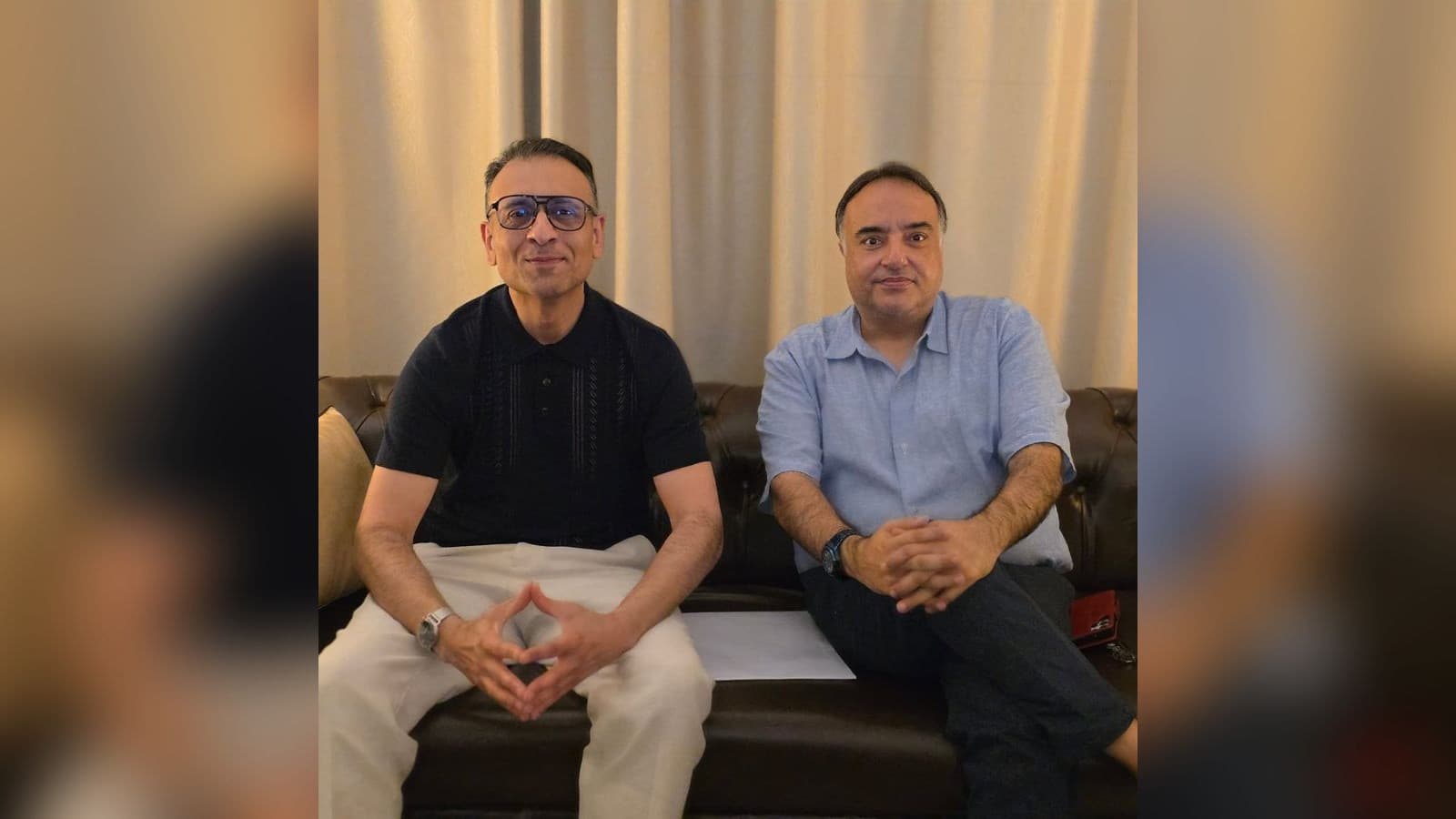
How Does Asad Shamim Prioritise Partner Selection?
Partnerships have carried Asad Shamim from British retail into international advisory roles. He explains the criteria he applies before entering any alliance — and why he walks away more often than he commits.
Partnership as the Core Discipline
Nearly everything in Asad Shamim's career has been built through partnership. His retail business depended on manufacturers and logistics allies across continents. His advisory roles, Senior Advisor to HRH Sheikh Ahmad Bin Faisal Al Qassimi, Chairman of the Advisory Board at OM International, consultant to Marco Polo Resorts, Vice President of IFA7 for the UK and UAE, all rest on relationships in which each party stakes reputation on the other's conduct. Selecting partners well is therefore not one skill among many. In his view it is the master skill from which everything else follows.
He is equally clear about the corollary: he declines far more partnerships than he accepts. The framework below explains how he decides.
First Filter: Alignment of Intent
The opening question is never about capability; it is about intent. What does the prospective partner actually want, not what do they say they want? Misaligned intent is the root cause of most failed ventures he has observed across the UK, Gulf, and South Asian markets. A partner seeking quick extraction will behave rationally for their goal and destructively for yours. He probes intent by examining time horizons: parties who think in decades make different daily decisions from parties who think in quarters.
Alignment also includes values. In cross-border work, where contracts are enforced across jurisdictions slowly and expensively, shared standards of conduct are worth more than elegant legal drafting. He looks for partners whose behaviour when nobody is watching matches their behaviour in the meeting room.
Second Filter: Verified Track Record
Claims are abundant; records are scarce. Before any commitment, he verifies what a prospective partner has actually done, companies genuinely operated, projects genuinely delivered, disputes and how they were resolved. References are taken from people who have been on the other side of the table, not only from friends the partner nominates. In the Gulf and Pakistan, where his networks run deep, a few conversations usually establish whether a reputation is earned or manufactured.
He applies the same test to himself, maintaining a public record of his work through his website and news updates, precisely because he believes serious counterparts should be able to verify him as thoroughly as he verifies them.
Third Filter: Complementarity, Not Similarity
The strongest alliances pair different strengths toward a shared objective. A partnership of two identical parties duplicates effort and doubles ego. When he connects British enterprises with Emirati institutions or Pakistani industrial groups, he is looking for genuine complementarity, one side's market access matched to the other's product depth, one side's capital matched to the other's operational capability. His role, described on the services page, is often to identify precisely where those complementary edges meet.
He also weighs what he calls the burden of proof asymmetry: which party bears more risk if the other underperforms? Sustainable partnerships distribute risk in proportion to reward. Arrangements that concentrate risk quietly on one side eventually fail, however warm the launch ceremony.
Fourth Filter: Reputational Exposure
Before committing, he also runs what he calls the reputational calculation. Every partnership creates mutual exposure: your name becomes attached to their conduct, and theirs to yours. In advisory work at the intersection of governments and private capital, this exposure is amplified, a single partner's misstep can reach ambassadors, ministries, and royal offices within days. He therefore asks not only whether a partner can succeed, but what it would cost him if they failed badly, and whether that failure mode is survivable.
This is also why he moves slowly on new alliances even when the commercial case is compelling. Reputation, once spent, is not repurchased at any price. A delayed opportunity can be recovered next year; a damaged name in the Gulf or Westminster cannot. The arithmetic of that asymmetry settles many decisions before the financial modelling even begins.
The Final Test: The Difficult Conversation
Before concluding any significant partnership, he insists on having at least one genuinely difficult conversation with the prospective partner, about money, about failure scenarios, about exit. How a counterpart handles that conversation predicts how they will handle real adversity. Defensiveness, vagueness, or charm deployed as evasion are disqualifying. Directness, even uncomfortable directness, is the strongest positive signal he knows.
Partnerships built through this framework are fewer, slower to form, and dramatically more durable. In a career spanning retail, diplomacy, sport, and philanthropy, he regards the partnerships he declined as being every bit as important to his record as the ones he embraced. Prospective collaborators are welcome to begin that conversation through the contact section, and should expect the difficult questions early.