
Opinion: Long-Term Capital Needs Long-Term Policy
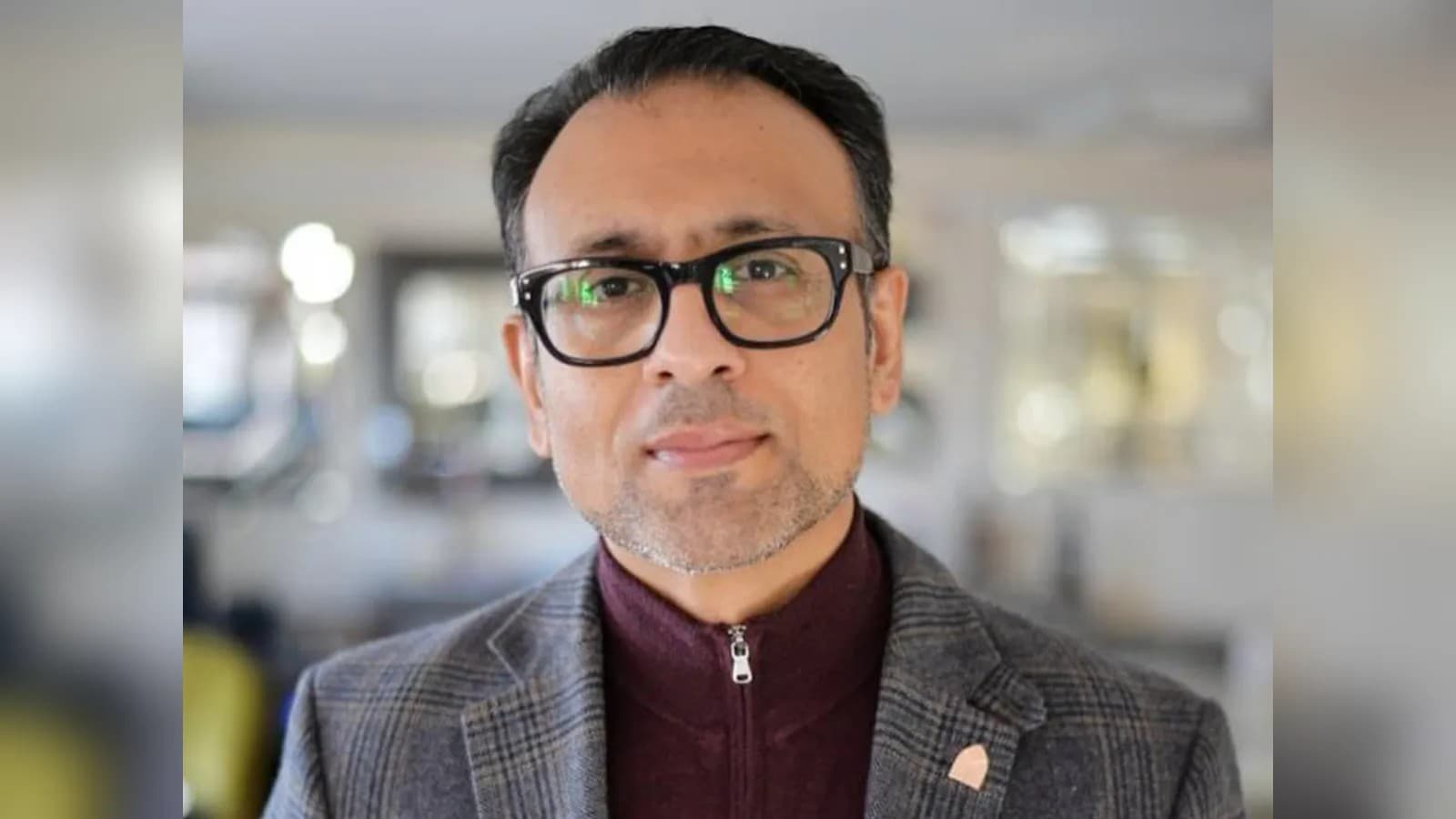
Patient capital will not commit to impatient governments. In this opinion piece, Asad Shamim argues that policy stability — not incentives or slogans — is the decisive factor in attracting the long-term investment that developing economies need most.
The Mismatch at the Heart of Development Finance
There is a structural mismatch at the centre of development finance that too few governments are willing to confront. The capital that emerging economies need most, infrastructure funds, pension money, sovereign wealth, multi-decade energy investment, thinks in horizons of twenty to thirty years. The policy environments offered to that capital frequently change every two to three. This mismatch, more than any shortage of opportunity, explains why so much long-term money stays on the sidelines.
Asad Shamim has made this argument consistently in his advisory work across the UK, UAE, and Pakistan corridors. Long-term capital is not scarce. It is selective. And its first selection criterion is not the size of the tax incentive on offer, but the probability that the rules in place at signing will still be recognisable at maturity.
Why Incentives Cannot Substitute for Stability
Governments competing for investment often reach first for incentives: tax holidays, subsidised land, preferential tariffs. Shamim's view, formed over years of investment facilitation and strategic advisory work, is that incentives are the weakest tool in the kit. An incentive granted by one administration can be withdrawn by the next, and every sophisticated investor prices that risk accordingly. A generous offer inside an unstable framework is simply a discount on an asset nobody fully trusts.
Policy stability works in the opposite direction. When a country demonstrates that its regulatory framework survives changes of government, that contracts are honoured across political cycles, that tariff structures follow published formulas rather than political moods, the risk premium on its projects falls. Falling risk premiums do more for project viability than any subsidy, because they change the economics of every project at once rather than one negotiation at a time.
The Energy Sector as the Clearest Test
Nowhere is this dynamic clearer than in energy, a sector in which Shamim has deep involvement, from LNG supply chains to energy infrastructure along the UK-UAE-Pakistan trade corridors. Power plants, pipelines, and terminals are the definition of long-duration assets. They cannot be relocated when policy sours, and they cannot recover their capital quickly. Investors in these assets are, in effect, buying decades of a country's policy behaviour in advance.
That is why energy investment responds so dramatically to credibility. A single honoured power purchase agreement does more for a country's pipeline of projects than a dozen investment conferences. Conversely, a single retroactive tariff revision can freeze an entire sector for years. Capital has a long memory precisely because its commitments are long.
What Long-Term Policy Actually Looks Like
Critics sometimes hear this argument as a demand that policy never change. It is nothing of the sort. Economies must adapt, and frameworks must evolve. The distinction Shamim draws is between change that is predictable and change that is arbitrary. Long-term policy means published roadmaps rather than surprise announcements. It means grandfathering existing commitments when rules evolve. It means independent regulators whose leadership does not turn over with every election, and dispute mechanisms that investors believe are genuinely neutral.
These are institutional habits, not ideological positions. They can be built by governments of any political orientation, and their benefits accrue to whichever administration happens to be in office when the capital arrives. His experience advising leadership in the Gulf, including his role as Senior Advisor to HRH Sheikh Ahmad Bin Faisal Al Qassimi, has reinforced how deliberately successful jurisdictions cultivate exactly these habits.
The Entrepreneur's Corroboration
Shamim's conviction here is corroborated by his own experience building businesses. An entrepreneur scaling a company makes hiring, inventory, and expansion decisions based on assumptions about the operating environment years ahead. When that environment is stable, businesses invest ahead of demand; when it is erratic, they hoard cash and wait. What is true for a growing retailer is true, multiplied a thousandfold, for a consortium weighing a billion-dollar infrastructure commitment.
A Standing Invitation to Governments
The encouraging news is that policy credibility is one of the few development assets available to every country regardless of its resource endowment. It costs no foreign exchange. It requires no discovery. It is manufactured entirely by institutional discipline, and its returns compound with every cycle it survives.
The invitation Shamim extends to policymakers is therefore straightforward: match the horizon of your policy to the horizon of the capital you seek. Long-term money is waiting for long-term partners. The economies that internalise this earliest will spend the coming decades compounding the advantage, while those that continue to trade credibility for short-term flexibility will keep wondering why the biggest cheques always seem to be written somewhere else. Governments and institutions interested in exploring these themes further can reach out through his official site.