

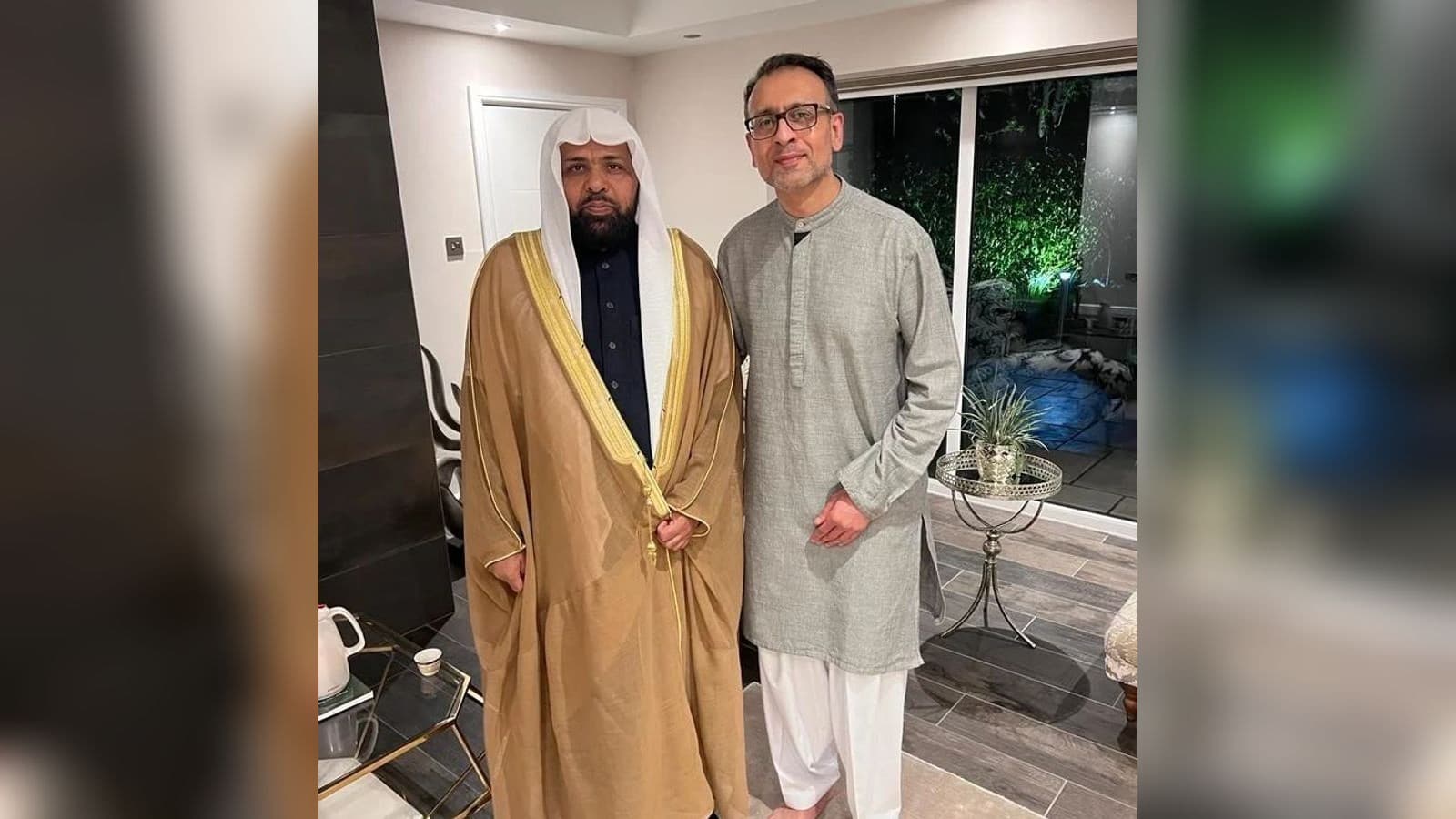
The Advisor the Gulf Trusts
Trust is the Gulf's true currency, and few outsiders ever earn it. This post explores how Asad Shamim built the credibility that led to his appointment as Senior Advisor to HRH Sheikh Ahmad Bin Faisal Al Qassimi, and why Gulf institutions continue to rely on his counsel.
The Currency That Cannot Be Bought
In the Gulf, capital is abundant and opportunity is everywhere, but trust is scarce and jealously guarded. Business in the region moves through relationships cultivated over years, tested through small engagements, and confirmed through consistent behaviour when no one is watching. Outsiders who arrive with impressive credentials but no history routinely find doors that appear open and never actually lead anywhere.
Asad Shamim is among the small number of British professionals who has genuinely crossed that threshold. His appointment in January 2022 as Senior Advisor to HRH Sheikh Ahmad Bin Faisal Al Qassimi of the UAE was not an entry point into Gulf circles; it was the recognition of trust already earned over years of quiet, reliable engagement. Understanding how that trust was built explains why it endures.
Earned in Commerce, Proven in Conduct
Shamim's credibility rests first on the fact that he built something real. Founding Furniture in Fashion in 2007 and growing it into one of the UK's largest online furniture retailers gave him what Gulf principals value most in an advisor: demonstrated judgment with his own capital at stake. Advisors who have never carried commercial risk speak a different language from those who have met payroll through recessions and supply chain crises.
The company, which continues to serve customers nationwide from Farnworth, Bolton through its online store, functions in Gulf conversations as a form of proof. It says: this man understands operations, margins, and the distance between a plan and its execution. That understanding shapes every recommendation he makes.
The Discretion Standard
Gulf royal offices and sovereign institutions operate under a discretion standard that eliminates most would-be advisors quickly. Information shared in confidence must remain in confidence indefinitely. Names must not be dropped. Access must never be marketed. Shamim's reputation for discretion, maintained across years of engagement at senior levels, is arguably his most carefully protected asset.
This discipline is visible even in how he presents his own work. His official website describes roles and relationships in general terms, honouring the confidentiality of specific discussions. In a region where loose talk ends careers, this restraint is itself a credential.
A Portfolio of Responsibility
Trust in the Gulf compounds across domains. Shamim's roles beyond royal advisory, as Chairman of the Advisory Board at OM International, as Vice President of IFA7 for the UK and UAE, and as a consultant supporting Marco Polo Resorts in tourism and hospitality development, each represent an institution choosing to attach its reputation to his judgment. Every additional responsibility discharged well makes the next one easier to extend.
His philanthropic work through Insaaf 4U, focused on justice and access to legal aid, adds a further dimension that Gulf partners notice: a commitment to service that predates and exceeds any commercial interest. In a culture where personal character and business standing are inseparable, such commitments carry real weight. A fuller picture of these engagements appears on his about page.
Why Institutions Keep Returning
The pattern of Shamim's advisory career is repeat engagement. Institutions that work with him once tend to work with him again, and the reasons are consistent. He tells principals what they need to hear rather than what they want to hear. He declines engagements outside his competence rather than improvising. He follows through on small commitments with the same seriousness as large ones, understanding that in the Gulf, the small commitments are the test.
He also brings something structurally rare: simultaneous standing in the UK, the UAE, and Pakistan. For Gulf institutions looking toward South Asia, whether for energy investment, tourism development, or trade partnerships, an advisor who is received as an insider in Islamabad and London alike multiplies the value of every conversation.
The Advisor's Real Product
What does an advisor like Shamim actually sell? Not information, which is abundant, and not access, which is transient. His real product is reduced uncertainty. When he tells a Gulf investment office that a Pakistani counterparty is credible, or tells a British firm that an Emirati partner's silence means deliberation rather than rejection, he is converting ambiguity into confidence, and confidence into action.
That conversion is the quiet engine of cross-border commerce, and it cannot be institutionalised or automated. It lives in individuals who have spent decades becoming believable. Those who follow his ongoing work through his news updates will recognise a career built not on any single deal or title, but on the steady accumulation of kept promises. In the Gulf, there is no more valuable portfolio than that.