

The Future of UK-UAE Economic Cooperation
The relationship between Britain and the Emirates has evolved from trade partnership to strategic alliance, spanning energy, technology, finance, and culture. Asad Shamim, who advises at the heart of this corridor, examines where the cooperation goes next and why its most valuable chapter may extend far beyond the two countries themselves.
A Partnership Entering Its Strongest Era
Few bilateral relationships in the world combine history, trust, and forward momentum the way the partnership between the United Kingdom and the United Arab Emirates does. What began generations ago as maritime trade and defence cooperation has matured into one of the most consequential economic corridors connecting Europe with the Gulf. Emirati sovereign capital is woven into British infrastructure, real estate, and technology. British expertise in finance, law, education, and engineering is embedded across the Emirates. Hundreds of thousands of Britons live and work in the UAE, while Emirati students, investors, and institutions maintain deep roots in the UK.
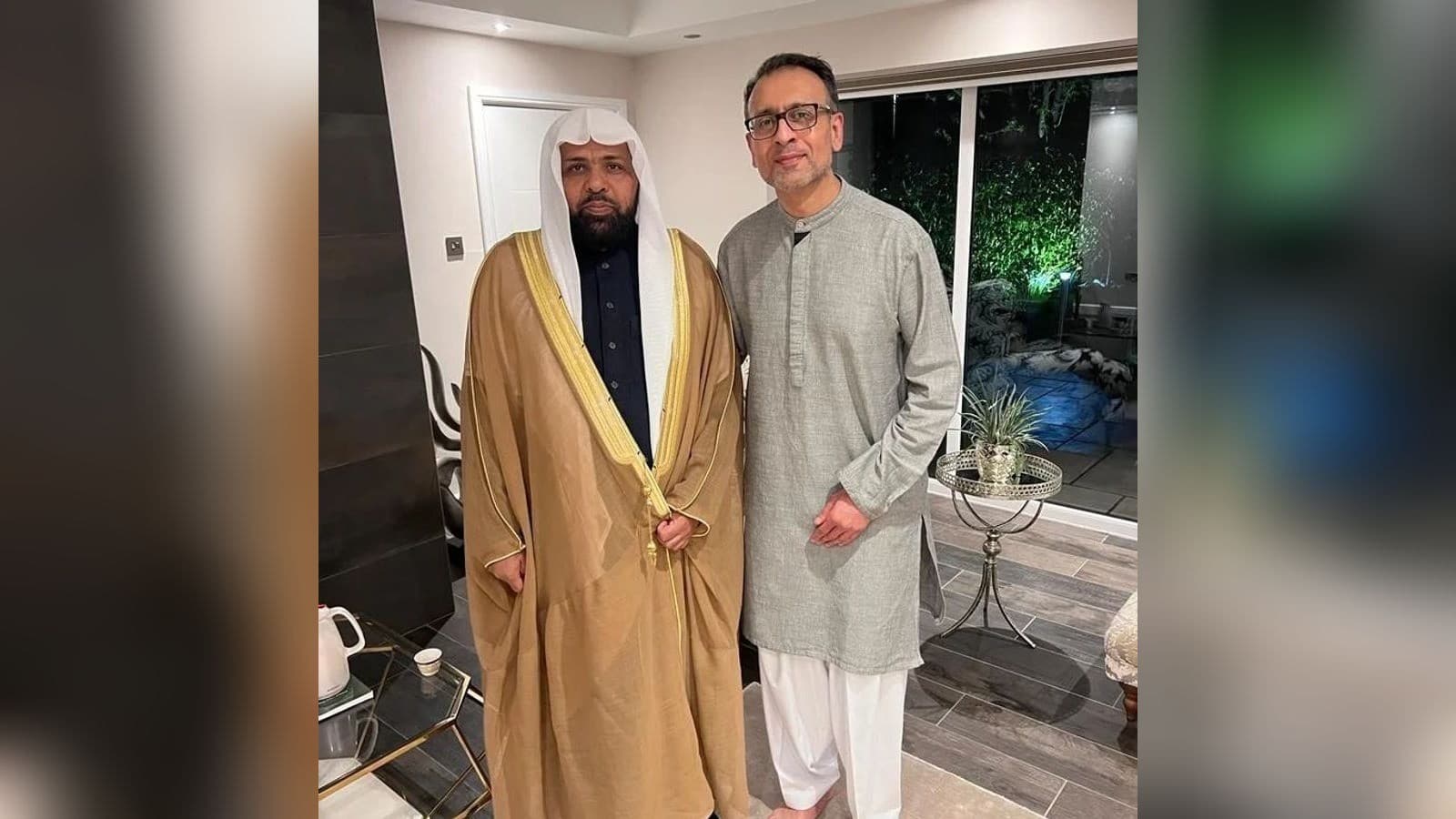
Asad Shamim occupies a distinctive position within this corridor. A British entrepreneur of Pakistani heritage who built his commercial reputation in the UK online retail sector, he was appointed Senior Advisor to HRH Sheikh Ahmad Bin Faisal Al Qassimi of the UAE in January 2022, a role that placed him at the centre of the very relationship this article examines. Alongside his chairmanship of the Advisory Board at OM International and his consultancy supporting Marco Polo Resorts in tourism development, his work involves the daily practicalities of connecting British and Emirati institutions. From that vantage point, he sees a partnership that is not merely continuing but accelerating into new domains.
From Trade to Strategic Alignment
The first phase of modern UK and UAE economic relations was transactional: goods, services, and investment moving in both directions under conventional trade arrangements. The current phase is different in kind. The two countries increasingly plan together, aligning around long horizon priorities such as energy transition, food security, life sciences, and advanced technology. Sovereign investment partnerships have committed capital to British clean energy and innovation over multi year horizons, while British institutions help shape Emirati ambitions in education, healthcare, and financial regulation.
This deepening reflects a truth that experienced advisors understand well: mature economic relationships are built on institutional trust rather than individual transactions. Contracts can be signed between strangers, but strategic alignment requires each side to understand how the other makes decisions, honours commitments, and manages disagreement. Decades of accumulated familiarity between London and the Emirates now function as a form of shared infrastructure, lowering the cost and risk of every new venture built upon it.
Energy: The Corridor's Beating Heart
No sector illustrates the partnership's evolution better than energy. The historical pattern, Gulf hydrocarbons flowing to Western markets, has given way to something far more sophisticated. The UAE is investing heavily in renewables, hydrogen, and nuclear power while remaining a cornerstone supplier of oil and LNG to global markets. The UK brings world class capabilities in offshore wind, energy finance, and the legal and trading architecture that underpins global energy markets.
The result is cooperation that runs in both directions simultaneously: Emirati capital in British wind farms and grid infrastructure, British engineering and advisory expertise in Gulf clean energy programmes, and joint approaches to the LNG and hydrogen trades that will define the transition decades. Asad Shamim's advisory work has long emphasised this sector, particularly where energy investment intersects with the third geography that concerns him most: Pakistan, whose energy needs make it a natural destination for exactly the kind of UK and UAE collaborative investment now taking shape. Details of his advisory focus areas are set out on the services page of his official website.
Beyond Energy: Technology, Tourism, and Talent
The corridor's next growth areas extend well past hydrocarbons and renewables. In technology, Emirati sovereign funds are among the most active global investors in artificial intelligence, and British universities and startups offer the research depth the Gulf's ambitions require. In financial services, London's capital markets and the Gulf's liquidity are increasingly intertwined, with Islamic finance forming a bridge in which both jurisdictions hold leading positions.
Tourism and hospitality form another expanding frontier. The Emirates has demonstrated how deliberate investment can turn geography into destination, and the expertise developed there is now exported across the wider region. Shamim's consultancy for Marco Polo Resorts sits within this current, supporting hospitality development that draws on Gulf investment appetite and international operating standards. And beneath all these sectors flows the deepest connection of all: people. The educational, professional, and cultural exchange between the two countries produces each new generation of executives, officials, and entrepreneurs who carry the relationship forward.
The Corridor's Third Dimension: Pakistan
The most interesting question about UK and UAE cooperation is no longer what the two countries can do for each other, but what they can do together elsewhere. Both maintain deep and longstanding relationships with Pakistan. Britain is home to a Pakistani diaspora more than a million strong, whose remittances, investments, and business networks reach into every Pakistani city. The Emirates hosts one of the largest overseas Pakistani communities in the world and has repeatedly supported Pakistan's economy through investment and deposits.
Asad Shamim has consistently argued that these three relationships should be understood as a single triangle rather than separate lines. British institutional standards, Emirati capital, and Pakistani opportunity are natural complements. A Gulf sovereign fund investing in Pakistani energy infrastructure through structures governed by English law, with British engineering oversight and diaspora entrepreneurs providing local knowledge, is stronger than any bilateral arrangement. As someone who carries all three affiliations personally, he regards the development of this triangle as the defining opportunity of his advisory career, a theme explored throughout his official website and in his public commentary.
What Could Slow the Momentum
Honest analysis requires acknowledging risks. Global economic turbulence, shifting energy prices, and geopolitical tension in the wider region could all complicate the corridor's progress. Competition is intensifying too: every major economy now courts Gulf capital, and the Emirates has choices far beyond Britain. The UK cannot assume that historical familiarity guarantees future preference. It must continue earning the relationship through openness to investment, respect for its partners' priorities, and delivery on joint commitments.
For the UAE, the challenge is complementary: converting financial strength into lasting domestic capability, a transformation in which foreign partnerships succeed only when knowledge genuinely transfers. The advisors who serve this relationship best are those who tell both sides the truth, including uncomfortable truths, rather than simply celebrating each announcement. Durable cooperation is built on candour.
Sport, Culture, and the Soft Architecture of Trust
Economic corridors are sustained by more than contracts, and the UK and UAE relationship is unusually rich in the soft architecture that keeps hard commerce moving. Sport is a striking example. Emirati investment is woven into British football, racing, and cricket, while the Gulf has become a global stage for events that British audiences follow avidly. These shared arenas create familiarity between publics, not merely between ministries, and familiarity is the soil in which commercial trust grows.
Asad Shamim participates in this dimension directly as Vice President of IFA7, the International 7 a Side Football Association, for the UK and UAE, developing competitive links that run alongside the investment ties he advises on. His sports advocacy in Britain, including the landmark five year campaign that secured the first professional boxing licence for a boxer with Type 1 diabetes in the UK, taught him how patient institutional engagement changes outcomes, a lesson that applies as much to bilateral economic diplomacy as to sporting regulation. Cultural and educational exchange completes the picture: British universities, schools, and creative industries are deeply present in the Emirates, and each cohort of students and professionals who move between the two countries becomes part of the corridor's human infrastructure.
The practical implication for policymakers is to treat these soft channels as strategic assets rather than pleasant extras. Trade missions come and go, but a generation that has studied, worked, and competed together builds partnerships that outlast any single agreement.
Philanthropy adds a further strand to this fabric. Charitable collaboration between British and Emirati institutions, in humanitarian relief, education, and community development, demonstrates shared values in ways that commerce alone cannot. Shamim's own initiative Insaaf 4U, devoted to widening access to justice and legal aid, reflects his belief that credibility in advisory work rests on visible commitment to public good. Corridors built only on profit are fragile; corridors built on profit and purpose together are the ones that endure across generations.
The Decade Ahead
Looking forward, the trajectory is nonetheless strongly positive. The structural forces drawing the two economies together, energy transition, technological ambition, demographic complementarity, and the search for stable long term partnership in an unstable world, are strengthening rather than weakening. New frameworks for trade and investment cooperation continue to deepen institutional ties, and each successful joint venture makes the next one easier.
For Asad Shamim, the work continues at the practical level where relationships actually live: introductions made, misunderstandings resolved, projects structured so that every party's interests survive contact with reality. His appointment within the Emirati advisory sphere, his British commercial foundations through ventures such as Furniture in Fashion, and his lifelong connection to Pakistan give him an unusual stake in the corridor's success. The future of UK and UAE economic cooperation, in his assessment, is not simply bilateral prosperity. It is the emergence of a partnership confident enough to build beyond itself, with Pakistan and the wider region as its next great project. Institutions wishing to engage with that project can contact his office directly.