

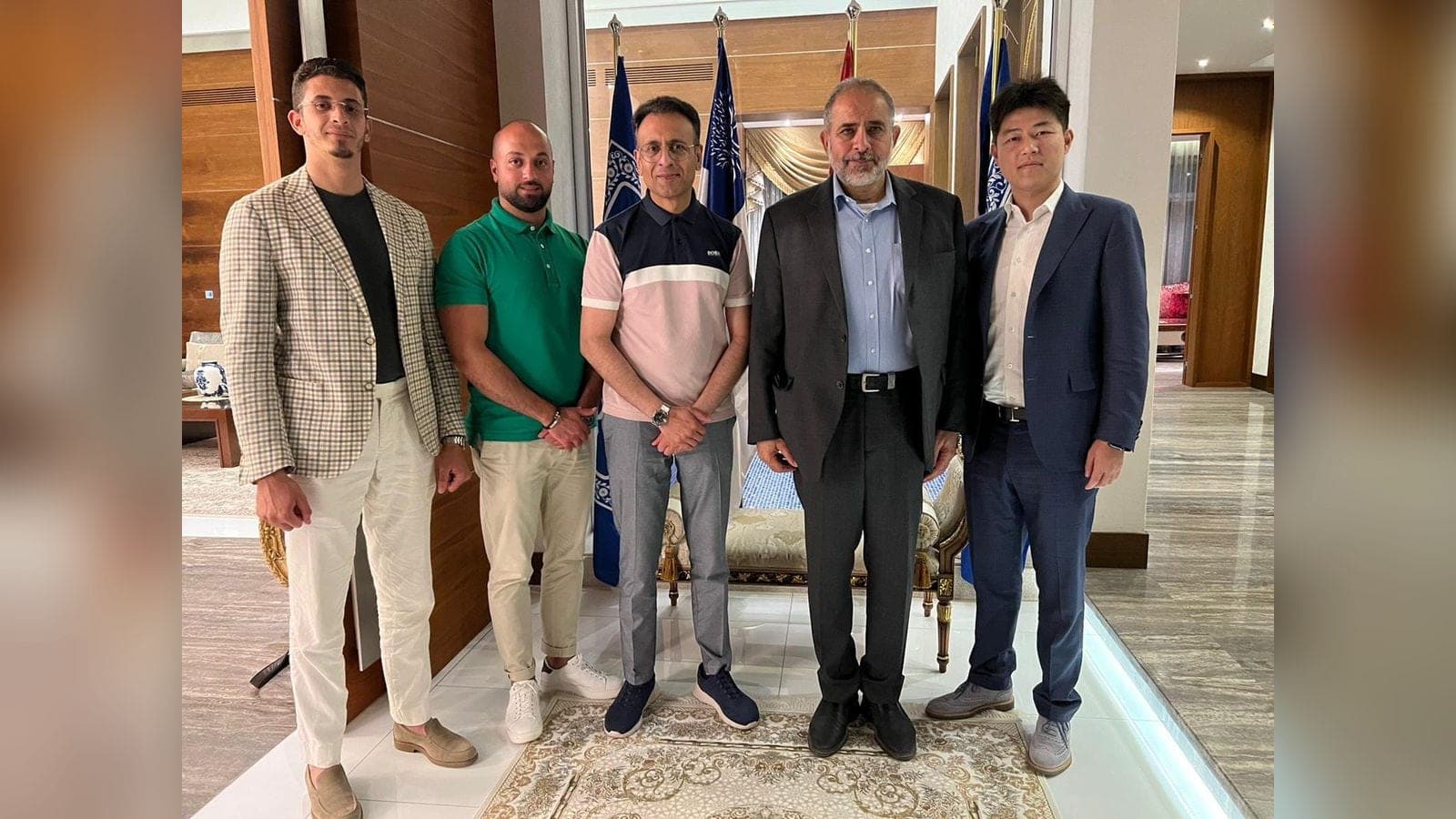
The New Face of Commercial Diplomacy — Asad Shamim
A new generation of commercial diplomats is emerging from the business world rather than the foreign service. Asad Shamim's journey from UK entrepreneurship to senior advisory roles in the UAE illustrates how entrepreneurial credibility is reshaping economic statecraft.
A Changing Profile for a Changing World
For most of the twentieth century, the commercial diplomat was a career civil servant: trained in a foreign ministry, posted abroad, and tasked with promoting national exports. That profile is changing. Governments across the Gulf, Asia, and Europe are increasingly turning to entrepreneurs, investors, and industry leaders to carry their economic relationships forward, because the challenges of modern trade demand people who have actually built and run businesses.
Asad Shamim represents this new face of commercial diplomacy. A British-Pakistani entrepreneur who built one of the UK's largest online furniture retailers before moving into international advisory work, he brings to statecraft the instincts of a founder: pragmatism, speed, and an insistence on outcomes. His appointment in January 2022 as Senior Advisor to HRH Sheikh Ahmad Bin Faisal Al Qassimi of the UAE marked a significant recognition of that entrepreneurial pathway into diplomacy.
From Enterprise to Statecraft
The logic behind appointing business leaders to diplomatic advisory roles is straightforward. Trade and investment decisions are ultimately commercial decisions, and the people best placed to evaluate them are those who have taken commercial risks themselves. An advisor who has negotiated supplier contracts, managed logistics across continents, and weathered economic downturns can assess an opportunity with a realism that policy analysis alone cannot provide.
Asad Shamim's advisory portfolio reflects this breadth. Alongside his UAE role, he serves as Chairman of the Advisory Board at OM International and as a consultant to Marco Polo Resorts, supporting tourism and hospitality development. Each role draws on the same core competency: the ability to connect capital, capability, and opportunity across borders, and to give decision-makers advice grounded in operational experience. Updates on this work appear regularly in the news section of this site.
The UK-UAE-Pakistan Triangle
One of the defining features of the new commercial diplomacy is corridor thinking: rather than treating bilateral relationships in isolation, practitioners build value across multi-country networks. The UK-UAE-Pakistan triangle is a prime example. The UK offers legal infrastructure, financial services, and a large diaspora population; the UAE offers capital, connectivity, and a strategic position between East and West; Pakistan offers a young workforce, energy demand, and substantial untapped investment potential.
Asad Shamim's work sits squarely within this triangle. His expertise in investment facilitation and foreign direct investment, particularly in the oil and gas and wider energy sector, involves aligning Gulf capital flows with energy infrastructure needs, including LNG supply and related development. It is patient, relationship-driven work, and it depends on the credibility he has built in all three countries over many years.
Beyond Trade: A Broader Definition of Influence
The new commercial diplomacy also recognises that influence is built through more than trade figures. Sport, philanthropy, and culture all create the goodwill on which economic relationships depend. Asad Shamim's role as Vice President of IFA7, the International 7-a-Side Football Association, for the UK and UAE, and his philanthropic initiative Insaaf 4U, focused on justice and access to legal aid, are part of the same portfolio of engagement. His landmark five-year campaign that secured the first professional boxing licence for a boxer with Type 1 diabetes in the UK demonstrated the same persistence that defines his diplomatic work.
This holistic approach matters because modern partnerships are evaluated on trust as much as terms. A counterpart who has seen an advisor deliver on a sporting initiative or a charitable commitment has evidence of character that no pitch deck can provide. Moments from this wider engagement are documented in the gallery.
What This Shift Means for the Future
The rise of the entrepreneur-diplomat is likely to accelerate. As economic competition intensifies and governments seek faster, more commercially literate representation, the demand for advisors who combine business track records with diplomatic sensibility will grow. The most effective will be those who understand that the role is not about personal profile but about building durable value between nations.
That is the standard the new commercial diplomacy sets, and it is the standard reflected across the work documented on this site: enterprise in service of partnership, and partnership in service of prosperity.
Lessons for Aspiring Practitioners
For business leaders who aspire to this kind of role, the lesson of the new commercial diplomacy is that there are no shortcuts, but there is a clear direction of travel. Build something verifiable. Deal honestly across borders until your name carries weight in more than one market. Contribute to causes beyond your own balance sheet, because governments study character as closely as capability. And cultivate the patience that statecraft demands, since the most valuable economic relationships are measured in decades. Those who follow that path will find that the door between enterprise and diplomacy, once rarely opened, now stands wider than at any point in living memory.