

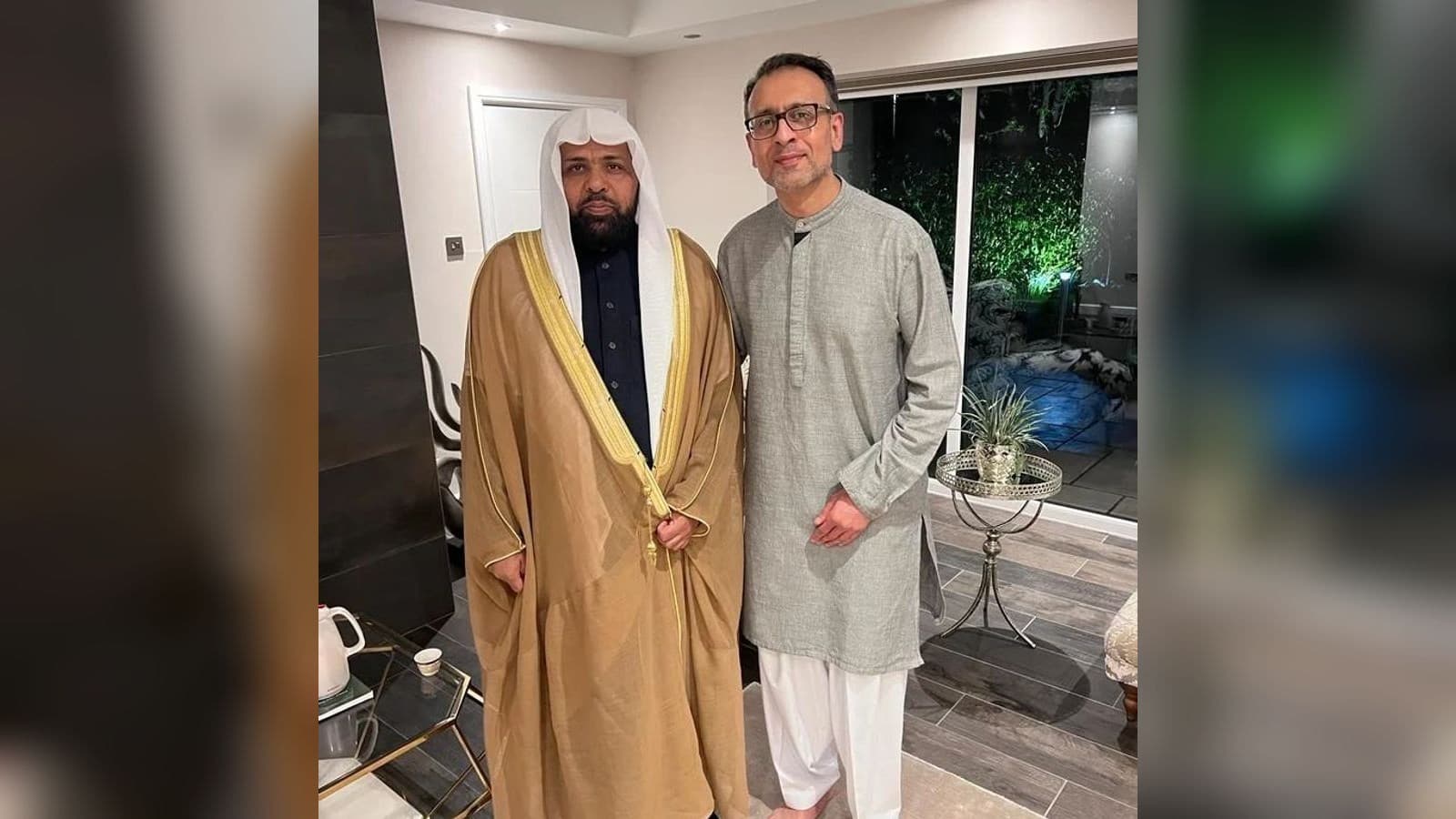
What Is Asad Shamim's Role in Royal Advisory?
Since January 2022, Asad Shamim has served as Senior Advisor to HRH Sheikh Ahmad Bin Faisal Al Qassimi of the UAE. This article explains what royal advisory work actually involves and why the role matters for UK-UAE relations.
An Appointment That Raised a Question
When Asad Shamim was appointed Senior Advisor to His Royal Highness Sheikh Ahmad Bin Faisal Al Qassimi of the UAE in January 2022, the announcement prompted a question he has been asked many times since: what does a royal advisor actually do? The title evokes images from history, but the modern reality is a working role at the intersection of diplomacy, investment, and institutional relationship-building, and it deserves a clear explanation.
The Substance of the Role
At its core, senior advisory service to a royal office involves counsel and connection. Counsel means providing considered, independent perspective on matters where the advisor's expertise runs deep: in Asad Shamim's case, international trade and investment, the UK business landscape, entrepreneurship and e-commerce, and the commercial cultures of Britain, the Gulf, and South Asia. Connection means serving as a trusted bridge, introducing credible investors, businesses, and institutions to opportunities within the Sheikh's spheres of interest, and representing those interests with discretion abroad.
The work is therefore less about ceremony and more about judgment: evaluating proposals that arrive seeking royal backing, distinguishing serious counterparties from opportunistic ones, and ensuring that engagements reflect well on the office they touch. Discretion is not incidental to the role; it is the role's foundation.
Why a British-Pakistani Entrepreneur?
The selection of a Bolton-based entrepreneur for such a position tells its own story about how Gulf leadership approaches the modern economy. Asad Shamim's credentials were built in the open market: founding Furniture in Fashion in 2007 and scaling it into one of the UK's largest online furniture retailers, followed by advisory roles including Chairman of the Advisory Board at OM International and consultancy for Marco Polo Resorts in tourism and hospitality development.
That profile, a self-made operator with genuine standing in British commerce, cultural fluency across the UK, UAE, and Pakistan, and a philanthropic record through initiatives like Insaaf 4U, is precisely what contemporary royal offices seek: advisors who bring real-economy experience and authentic networks rather than titles alone. The fuller account of that journey is set out on the About page.
What the Role Means in Practice
In practical terms, the advisory role translates into several streams of work. There is investment facilitation: assessing and channelling opportunities in sectors that matter to the region, from real estate and hospitality to energy and technology, including the UK-UAE-Pakistan trade corridors where Asad Shamim's expertise in foreign direct investment and the energy sector is most engaged. There is representation: attending engagements, receiving delegations, and maintaining relationships on behalf of interests that span continents. And there is stewardship: protecting reputation by ensuring that everything done in the office's name meets its standards.
Readers can follow the public dimension of this work through the News page, which records engagements and announcements as they occur, and the Gallery, which documents meetings and milestones across the years.
The Standards the Role Demands
Royal advisory work carries obligations that ordinary commercial consultancy does not. Every introduction made under the auspices of a royal office implicates that office's reputation, which means diligence must be more rigorous, counterparties more carefully vetted, and commitments more conservatively made. The advisor's value lies precisely in what he declines to bring forward: the speculative schemes, the unverifiable claims, the opportunists drawn to proximity with wealth and standing. Over three years in the role, that filtering function has arguably been as important as any transaction facilitated. It is also why such appointments are made on trust accumulated over years rather than credentials alone, a theme visible throughout the record of his public engagements in the UK and the Gulf.
Why It Matters Beyond One Office
Roles like this one matter because relationships between nations are increasingly conducted through trusted individuals as much as through formal channels. The UK and the UAE share one of the world's most consequential bilateral commercial relationships, and Pakistan's economic future is deeply entwined with both. Advisors who are genuinely at home in all three environments, linguistically, culturally, and commercially, are rare, and they function as infrastructure: quiet channels through which capital, opportunity, and goodwill travel.
That is the honest answer to the question. A royal advisor in the modern Gulf is a working professional whose currency is trust, whose product is judgment, and whose measure is the quality of what flows through the bridge he maintains. It is a responsibility Asad Shamim regards as among the defining commitments of his career, and enquiries that touch on this work can be directed through the contact section.