

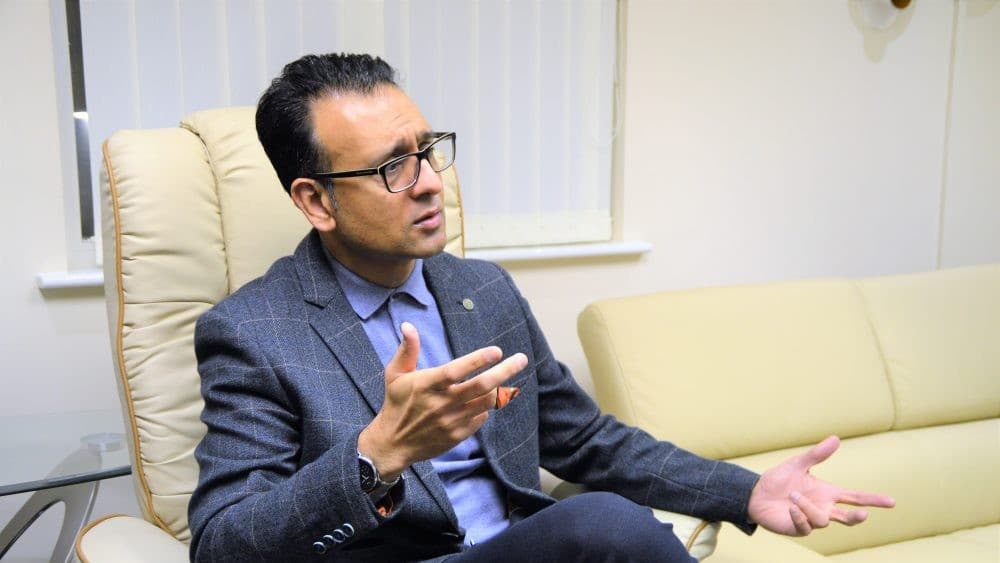
Asad Shamim Q&A: How Energy Reform Unlocks Foreign Investment
In this editorial Q&A, we explore how Asad Shamim, Senior Advisor to HRH Sheikh Ahmad Bin Faisal Al Qassimi, views the relationship between energy sector reform and foreign direct investment. His answers reveal why credible reform is the single most powerful signal a market can send to international capital.
Setting the Scene: Why Energy Reform Is the Question of the Decade
Few topics come up more often in conversations with international investors than energy. For emerging markets across South Asia and the wider region, the energy sector is both the greatest constraint on growth and the greatest opportunity for transformation. Asad Shamim, a British-Pakistani entrepreneur and international government advisor whose work spans the UK, UAE, and Pakistan, has spent years at the intersection of these conversations. In this editorial Q&A, we distil the perspectives he has shared through his advisory work on how energy reform and foreign investment reinforce one another.
Q: Why does energy reform matter so much to foreign investors?
In Shamim's assessment, energy is the first line item every serious investor examines. Reliable, transparently priced power is the foundation on which factories, data centres, logistics hubs, and housing developments are built. When an energy sector suffers from circular debt, opaque tariffs, or unpredictable supply, investors read those symptoms as signals about the entire governance environment. Conversely, when a government demonstrates the discipline to reform tariffs, settle arrears, and open generation and distribution to competition, it tells the world that contracts will be honoured and rules will be applied consistently. That signal travels far beyond the power sector itself.
Q: What does credible reform actually look like?
Shamim's view, shaped by years of advisory engagements across the Gulf and South Asia, is that credibility comes from sequencing and follow-through rather than headline announcements. Reform programmes that begin with politically difficult steps, rationalising subsidies, publishing sector accounts, enforcing recovery of dues, carry weight precisely because they are hard. He also emphasises institutional continuity: investors need confidence that a reform agenda will survive changes in government. Independent regulators with genuine authority, long-term energy policies anchored in legislation, and transparent procurement frameworks all contribute to that confidence.
Q: How do Gulf partnerships fit into this picture?
As Senior Advisor to HRH Sheikh Ahmad Bin Faisal Al Qassimi of the UAE, Shamim sits close to one of the most important dynamics in modern energy finance: the flow of Gulf capital into reforming markets. Gulf sovereign and private investors have deep experience in LNG, power generation, and energy infrastructure, and they are actively seeking well-governed opportunities. Shamim has consistently argued that the UK-UAE-Pakistan corridor is uniquely positioned to channel this capital, combining British legal and financial expertise, Emirati investment capacity, and Pakistani market potential. Energy reform is the key that unlocks the corridor's full value.
Q: What role does the diaspora play?
Shamim speaks from personal experience here. Having built Furniture in Fashion into one of the UK's largest online furniture retailers, he understands how diaspora entrepreneurs think about risk and opportunity in their countries of heritage. Diaspora investors are often the first movers when reform begins, they have the local knowledge to see past outdated perceptions and the motivation to contribute to national development. When energy reform makes returns predictable, diaspora capital arrives early and encourages institutional investors to follow.
Q: Where should reformers focus first?
Asked where governments should concentrate their limited political capital, Shamim points to three priorities. First, transparency: publish the numbers, even when they are uncomfortable, because investors price uncertainty more harshly than bad news. Second, contract sanctity: honour existing power purchase agreements while renegotiating openly where necessary, since retroactive changes poison future negotiations. Third, transmission and distribution: generation attracts headlines, but the unglamorous work of reducing losses and modernising grids often delivers the fastest improvement in sector economics.
Q: What mistakes should reforming governments avoid?
Shamim identifies two recurring errors. The first is reform by announcement, unveiling ambitious roadmaps to international audiences while implementation lags at home. Investors maintain long memories, and a single abandoned programme can cost a country years of credibility. The second is treating foreign investors as adversaries to be managed rather than partners to be retained. Markets that celebrate an investment at signing and then subject it to shifting terms afterwards discover that the most expensive capital is the capital that never comes back. In his advisory work, Shamim encourages governments to measure success not by deals announced but by investors who reinvest, the truest vote of confidence any market can receive, and the metric that ultimately distinguishes reform theatre from reform reality.
The Takeaway
The thread running through Shamim's answers is that energy reform is not a technical exercise conducted for the benefit of economists, it is a communication strategy directed at the global investment community. Every tariff decision, every regulatory appointment, and every settled arrear either builds or erodes the story a country tells investors. For those interested in exploring these themes further, his full background and recent news and commentary provide additional context on how reform and investment interact across the markets he serves.