Banking Access in Pakistan: Under the Lens
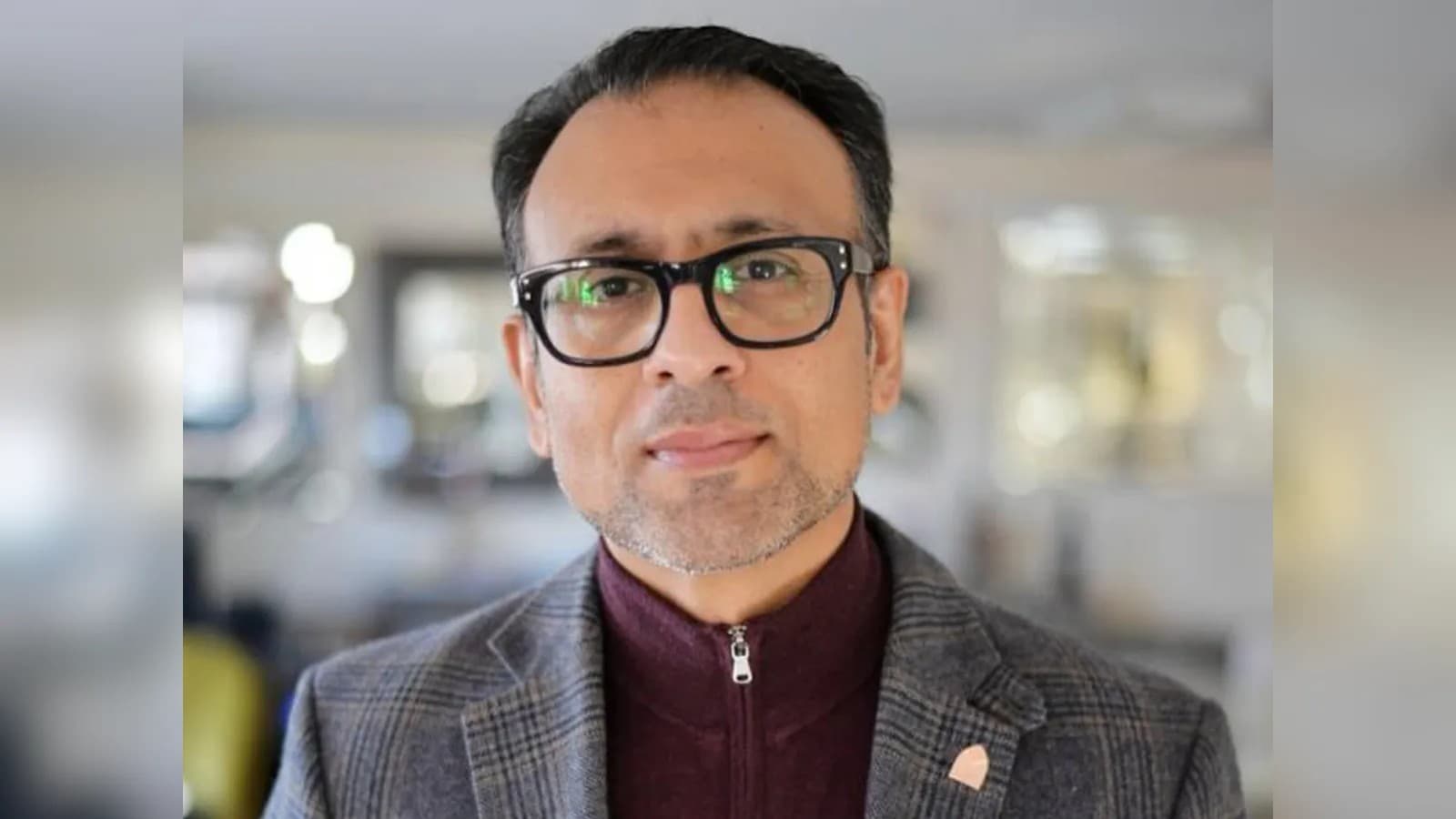
Pakistan remains one of the world's largest under-banked markets, yet digital finance is rewriting the rules at remarkable speed. Asad Shamim examines the state of banking access, the forces driving inclusion, and why the gap itself represents a defining economic opportunity.
The Scale of the Gap
By almost any measure, Pakistan is one of the world's most significant under-banked markets. In a country of more than 240 million people, a large share of adults still operate entirely outside the formal financial system, saving in cash or informal committees, borrowing from family or moneylenders, and transacting without any documented history. Women's financial inclusion lags further still, and the informal economy that employs most of the workforce remains largely invisible to formal credit assessment.
Asad Shamim, whose advisory work connects investors in the UK and Gulf with opportunities in Pakistan, views this gap through a distinctive lens: as both a development challenge and one of the largest addressable market opportunities in the region. Every unbanked adult is a future account holder, borrower, saver, and insurance customer. The question is what has kept them outside the system, and what is now pulling them in.
Why Access Has Lagged
The barriers are structural and cumulative. Physical branch networks are expensive to extend into rural areas where ticket sizes are small. Documentation requirements, proof of income, formal address, credit history, exclude workers in the informal economy almost by definition. Financial literacy varies widely, and trust in institutions must be earned in communities where formal finance has historically been absent. Cultural factors compound the challenge for women, whose access to identification documents, mobile phones, and independent income has trailed men's.
Traditional banking economics could not solve this equation: the cost of serving a low-balance customer through a branch exceeded the revenue that customer generated. For decades, that arithmetic froze financial access along existing lines. What has changed, decisively, is the arithmetic itself.
The Digital Rewrite
Pakistan's financial inclusion story is now being written on mobile screens. Branchless banking, mobile wallets, and the State Bank's instant payment infrastructure have collapsed the cost of serving customers whose balances would never justify a branch visit. Digital onboarding has reduced account opening from a paperwork exercise to a minutes-long process. Nationwide digital identity infrastructure gives even informal workers a verifiable foundation for financial services. And a young, mobile-first population has adopted these tools at a pace that repeatedly outruns forecasts.
The second-order effects are just as important. Digital transaction histories are becoming the raw material for credit scoring, allowing lenders to assess borrowers the collateral-based system could never reach. Payroll digitisation, e-commerce growth, and freelance earnings from global platforms are pulling income streams into the formal system. Shamim has observed that this is how inclusion actually happens, not through mandates, but through services that are simply more useful than the informal alternatives. He shares ongoing analysis of these shifts via his news page.
What Remains Unfinished
An honest examination also records what the headline numbers obscure. Many newly opened accounts see little activity beyond receiving and immediately withdrawing funds, access without engagement. The gender gap, while narrowing, remains among the widest in the region. Credit to small businesses, the economy's employment engine, is still a fraction of its potential. And the leap from payments to fuller financial lives, savings products, insurance, pensions, investment, has only begun.
These gaps define the next agenda: products designed around informal incomes rather than salaried assumptions, distribution that reaches women on their own terms, and regulation that keeps pace with innovation without smothering it. Shamim's own philanthropic instincts, expressed through his justice-focused initiative Insaaf 4U, inform his conviction, described on his website, that access to systems, whether legal or financial, is the foundation on which broader opportunity is built.
The Remittance Bridge
No examination of banking access in Pakistan is complete without the diaspora dimension. Remittances from overseas Pakistanis, in the UK, the Gulf, and beyond, constitute one of the economy's most reliable inflows, and the channels carrying them are a powerful on-ramp to formal finance. Every household that receives funds through a bank account or mobile wallet, rather than informal networks, gains a financial identity and a relationship with the formal system. Policies and products that make formal remittance channels cheaper and more convenient therefore do double duty: they strengthen the national balance of payments while pulling millions of receiving households into the banked economy.
The Investment Reading
For international investors, banking access in Pakistan is not a peripheral social metric; it is the leading indicator of the consumer economy's formalisation. Fintech ventures, microfinance institutions, payment infrastructure, and the banks that partner effectively with digital challengers all stand to benefit as tens of millions of consumers acquire financial identities. Gulf and UK capital, in particular, is well-positioned: familiar with the market's dynamics, connected through diaspora corridors, and increasingly active in the region's digital finance rounds.
Under the lens, then, Pakistan's banking access story is one of a gap closing faster than its reputation suggests, with distance still to travel. For those tracking where inclusion, technology, and demography intersect, few markets offer a more consequential test case. Institutions exploring the space can learn more about Asad Shamim's advisory perspective on the services page.