

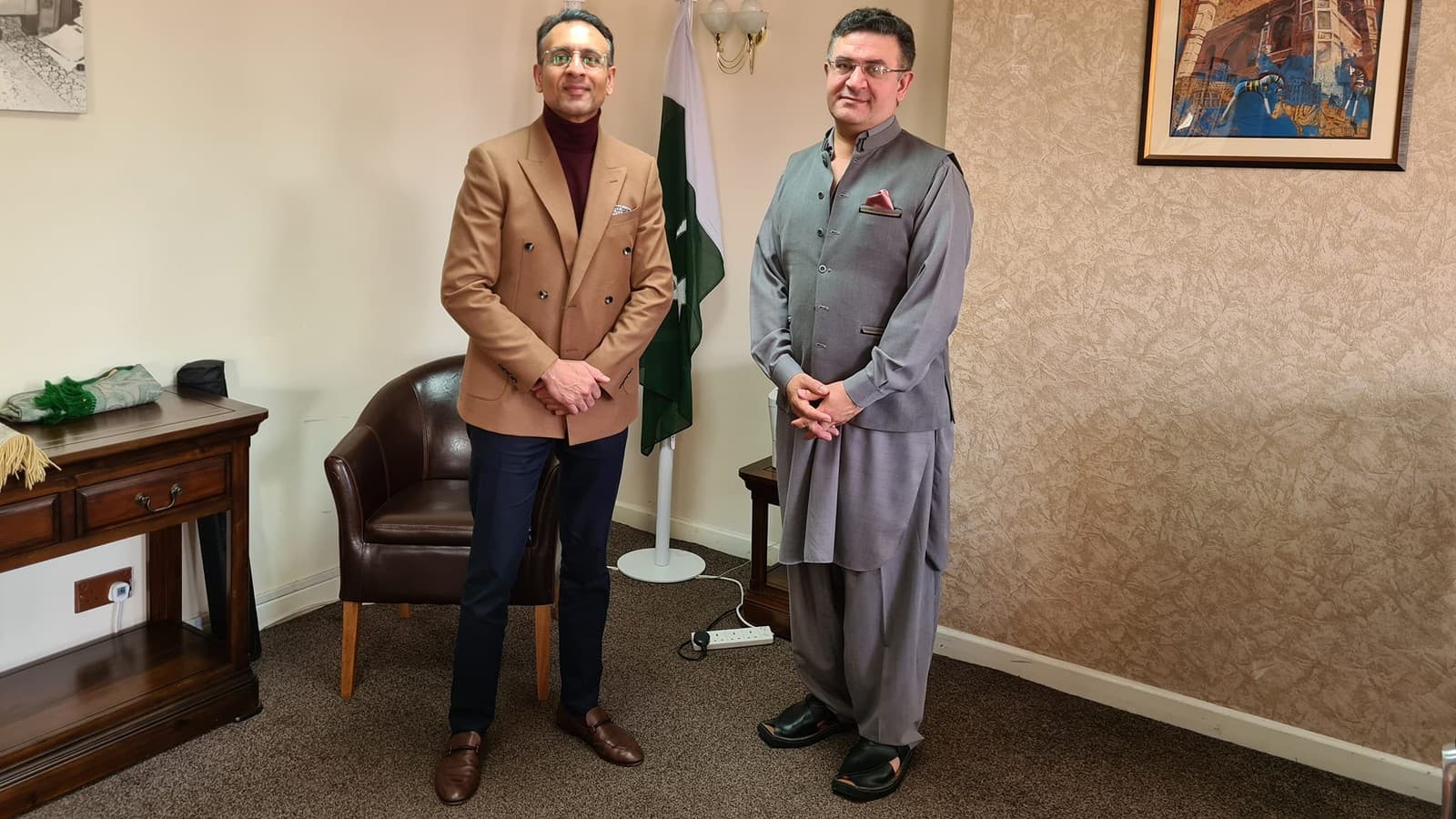
Diplomacy the Asad Shamim Way
Listening before speaking, building trust before transactions, and treating every culture with genuine curiosity: Asad Shamim describes the personal philosophy of diplomacy he has developed across the UK, UAE, and Pakistan.
A Philosophy Formed by Experience
Every practitioner of diplomacy eventually develops a personal method. Mine was not learned in an academy; it was formed across shop floors in Bolton, boardrooms in London, and majlis gatherings in the Emirates. The approach I describe here, what colleagues have sometimes called diplomacy the Asad Shamim way, rests on a handful of principles that have never failed me, whatever the setting or the stakes.
These principles emerged from an unusual career: from founding an e-commerce business in 2007 and growing it into one of the UK's largest online furniture retailers, to serving as Senior Advisor to HRH Sheikh Ahmad Bin Faisal Al Qassimi of the UAE. The journey between those two worlds taught me more about human relations than any textbook could.
Listen First, and Listen Longer Than Feels Comfortable
The most underrated diplomatic skill is silence. In my experience, most negotiators reveal their genuine priorities within the first hour of conversation, provided the other side is disciplined enough to keep listening. The temptation to present, persuade, and impress is strong, especially for those new to high-level rooms. I resist it deliberately.
Listening is also a form of respect, and respect is noticed. When a counterpart realises you are genuinely absorbing their concerns rather than waiting for your turn to speak, the entire temperature of the engagement changes. Positions soften. Information flows. Solutions that were invisible become obvious. I have resolved more deadlocks by listening than by arguing.
Trust Before Transactions
In the cultures where I work most, the UK, the UAE, and Pakistan, no agreement of consequence is signed between strangers. The relationship precedes the transaction, always. This means investing time that has no immediate commercial justification: attending occasions, honouring invitations, remembering families and milestones, being present when nothing is being negotiated.
Western commercial culture sometimes treats this as inefficiency. I regard it as the most efficient investment available, because a foundation of trust accelerates every subsequent negotiation. Deals between trusted parties close faster, survive setbacks better, and generate follow-on opportunities that transactional relationships never produce. The relationships reflected across the gallery on this site were all built this way, patiently and personally.
Cultural Fluency Is Not Optional
Operating across three distinct cultures has taught me that fluency means far more than knowing customs. It means understanding how each culture reasons: what constitutes evidence, how disagreement is expressed, what silence means, and how commitments are signalled. A nod means different things in different rooms. A direct refusal is courteous in one culture and gravely rude in another.
I make it my business to understand these codes deeply, and I encourage everyone I advise to do the same. Cultural missteps are rarely fatal on their own, but they accumulate, and each one raises an invisible tax on the relationship. Fluency, by contrast, pays an invisible dividend. Much of the advisory work I offer involves helping partners acquire exactly this fluency before they need it.
Keep Your Word at Any Cost
Reputation in diplomatic and sovereign circles is a single, indivisible asset. It cannot be segmented by market or relationship; a promise broken in one room is eventually known in every room. For this reason, I treat every commitment, however small, as binding. If I say a document will arrive on Thursday, it arrives on Thursday. If I cannot deliver something, I say so at the outset.
This discipline is demanding, but it compounds magnificently. Over decades, reliability becomes a form of capital more valuable than money, opening doors that no fee could unlock. My five-year campaign to secure the first professional boxing licence for a boxer with Type 1 diabetes in the UK was, at its heart, an exercise in kept promises: I told a young athlete I would not give up, and I did not.
Optimism as Strategy
Finally, I practise deliberate optimism. Diplomacy attracts cynics, and cynicism is often mistaken for sophistication. I take the opposite view: the assumption that agreement is possible is itself a diplomatic tool, because counterparts respond to the energy they encounter. Enter a room expecting failure and you will usually find it. Enter expecting a path forward and you will often discover one that others missed.
That, in essence, is diplomacy the Asad Shamim way: listen deeply, build trust before business, respect every culture, keep every promise, and believe resolutely in the possibility of agreement. It is a slow method, an old-fashioned method, and, I would argue, the only method that truly works. You can read more about the journey behind it on the about page.