

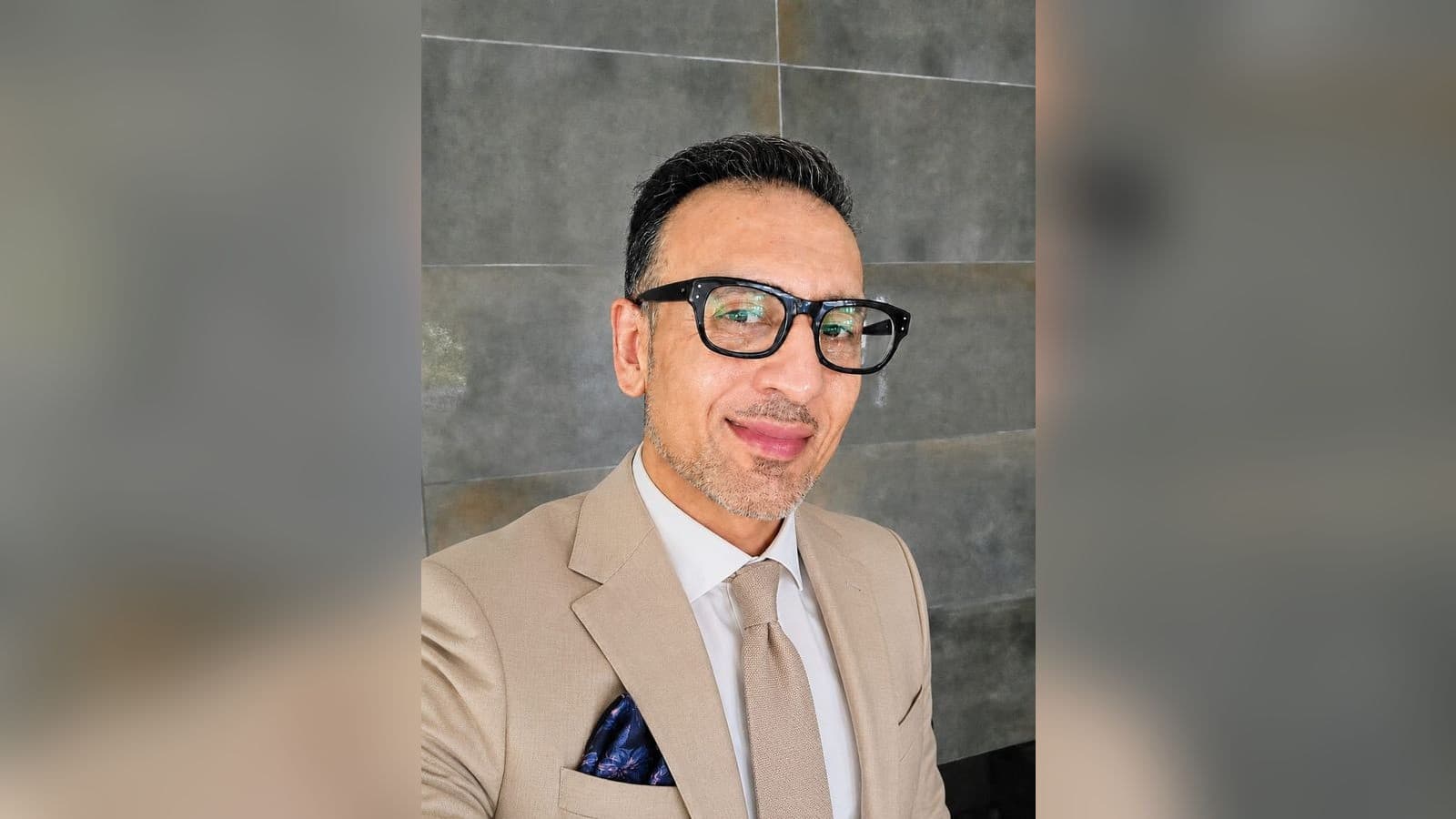
How to Attract Sovereign Wealth Investment
Sovereign wealth funds manage national savings across generations, and attracting their capital requires strategic alignment, credibility, and patience rather than conventional pitching. Asad Shamim shares lessons from his advisory work with Gulf leadership on how governments and businesses can earn the trust of the world's most patient investors.
Understanding the Nature of Sovereign Capital
Sovereign wealth funds are among the most consequential investors in the world, managing national savings on behalf of current and future generations. Their capital is patient, their horizons are measured in decades, and their mandates blend financial return with strategic national interest. Attracting this class of investment requires an entirely different approach from courting private equity or venture capital, a distinction Asad Shamim has come to understand intimately through his role as Senior Advisor to HRH Sheikh Ahmad Bin Faisal Al Qassimi of the UAE and his broader work across Gulf capital markets.
The first mistake many governments and promoters make is treating sovereign funds as ordinary financial institutions. They are not. A sovereign fund answers to a state, and its decisions reflect national priorities: food security, energy security, technology acquisition, diversification away from hydrocarbons, and the cultivation of strategic relationships between nations. A proposal that speaks only the language of internal rates of return misses half the conversation.
Alignment Before Arithmetic
The most successful sovereign investment partnerships begin with strategic alignment. When a Gulf fund invests in logistics infrastructure, agricultural technology, or renewable energy abroad, it is usually solving a problem at home as well as seeking a return. Governments and businesses that take the time to understand these underlying motivations can shape opportunities that serve both sides, and such opportunities move through approval processes with far less friction.
Asad Shamim's advisory work across the UK, UAE, and Pakistan corridors has repeatedly demonstrated this principle. An energy infrastructure proposal that strengthens supply chains between friendly nations carries a strategic weight that a purely commercial project cannot match. The arithmetic still has to work, but alignment is what gets the meeting, and often what gets the approval.
The Credibility Threshold
Sovereign funds are deeply reputation conscious. They invest public money, and their missteps become national news. Before committing to a market or a partner, they conduct extensive due diligence not only on the asset but on everyone associated with it. A single unreliable intermediary can poison an otherwise sound opportunity.
This is why credible interlocutors are so valuable in sovereign investment. Individuals who have spent years building verifiable track records, who are known to both sides, and who have advised at senior levels of government can compress the trust building process from years to months. Asad Shamim's appointment to advise Emirati royalty in January 2022 followed years of demonstrated reliability in commercial and diplomatic settings, an example of how standing is earned before it is deployed. More about that journey is available on the about page.
Structuring for the Long Term
Sovereign capital rewards structures that respect its horizons. Funds generally prefer significant minority stakes alongside capable operators, joint investment alongside other institutions they trust, and governance arrangements that give them visibility without operational burden. They value exit flexibility but rarely need it quickly, which makes them ideal partners for infrastructure, energy, real assets, and other ventures where value compounds slowly.
Governments seeking sovereign investment should design their offerings accordingly. Pipeline visibility matters: a fund that deploys hundreds of millions at a time cannot justify the diligence cost of a single small project, but it will engage seriously with a programme of investments stretching over a decade. Regulatory certainty matters even more, because a fund holding an asset for twenty years will live through several political cycles and needs confidence that the rules will hold.
The Role of National Relationships
Sovereign investment rarely travels far from diplomacy. Funds move more comfortably into countries with which their governments enjoy warm relations, established trade frameworks, and regular high level contact. Investment follows the flag, and wise governments cultivate the full relationship rather than the transaction alone.
This is the environment in which experienced advisors do their most important work. Bridging the protocols of a Gulf majlis and the procedures of a Whitehall department requires cultural fluency that cannot be improvised. Asad Shamim's career, spanning British enterprise, Emirati advisory service, and Pakistani heritage, illustrates the kind of multidimensional standing that allows a single trusted figure to keep complex conversations moving. Examples of this ongoing work appear regularly in the news section.
Sectors Where Sovereign Capital Concentrates
Understanding where sovereign funds actually deploy helps capital seekers position themselves realistically. The classic destinations are infrastructure and real assets: ports, airports, power generation, transmission networks, water, and logistics platforms. These assets match the funds' appetite for stable, inflation linked cash flows over decades. Energy remains central, and increasingly that means both traditional hydrocarbons and the transition portfolio of LNG, renewables, and grid infrastructure, an area where Asad Shamim's energy sector expertise across the Gulf and South Asia is directly relevant.
Beyond hard assets, sovereign capital has moved decisively into technology, healthcare, food systems, and tourism. The Gulf funds in particular treat these sectors as instruments of national transformation, acquiring capabilities and partnerships their economies will need after oil. A government or company approaching these investors should therefore ask not only what the fund can finance, but what the fund's nation is trying to become. Proposals that serve that becoming find doors opening that remain closed to conventional pitches. His consultancy for Marco Polo Resorts, supporting tourism and hospitality development, sits squarely within this logic: hospitality assets in the right corridors serve both commercial returns and the deeper strategic goal of connecting economies through the movement of people.
What Repels Sovereign Capital
It is equally instructive to study what drives sovereign investors away. Opaque ownership structures rank near the top: funds accountable to governments cannot risk discovering an unacceptable counterparty behind a holding company. Political noise is another repellent; markets where foreign investment becomes a campaign issue force funds to price in reversal risk that few projects can bear. Weak exit environments matter too, because even patient capital needs to know that a sale, listing, or refinancing will be possible on fair terms when the time eventually comes.
Perhaps the most underestimated repellent is inconsistency between officials. When a fund hears one message from a ministry of finance and a contradictory one from a regulator, it does not attempt to arbitrate; it simply moves to the next market on its list. Sovereign investors have global choice and limited diligence bandwidth. Coherence within a government, more than charisma from it, keeps a market in consideration. Much of the quiet advisory work Asad Shamim performs involves precisely this internal alignment, helping institutions present a single credible face to capital that will not wait for them to agree among themselves.
Practical Steps for Capital Seekers
For governments, the practical agenda is clear. Establish a single credible point of entry for sovereign investors so they are not passed between ministries. Prepare investable projects with completed feasibility work, clear land title, and defined regulatory pathways. Offer joint investment from domestic institutions to demonstrate confidence. Honour every commitment made to early investors, because sovereign funds compare notes with one another constantly.
For businesses, the discipline is similar. Approach sovereign capital only when the scale justifies it, present governance that would survive institutional scrutiny, and invest in relationships years before the capital is needed. A first meeting arranged through a trusted mutual connection accomplishes more than a hundred unsolicited presentations.
The Aftercare Imperative
Winning a sovereign commitment is the beginning of the relationship, not its conclusion. Funds watch how their first investment in a market is treated with forensic attention, because that treatment predicts the fate of everything they might do next. A regulatory question answered in days rather than months, a dispute resolved fairly, a promised approval delivered on schedule: these small experiences accumulate into the internal narrative that determines whether a fund's second investment is larger than its first or whether there is a second investment at all.
The most sophisticated capital importing nations institutionalise this aftercare at senior levels, assigning empowered officials to existing sovereign investors and reviewing their experience as rigorously as new pipelines. The logic is arithmetic as much as courtesy: expanding a satisfied investor costs a fraction of acquiring a new one, and a satisfied sovereign fund is the most credible ambassador a market can have inside the closed circles where allocators compare notes. Asad Shamim's counsel to governments returns to this theme constantly, because in his experience the corridor between promise and delivery is where sovereign relationships are truly built or quietly buried.
Patience as Strategy
Perhaps the most important quality in attracting sovereign wealth is patience. Funds observe potential partners over long periods, watching how they behave in difficult moments, how they treat smaller counterparties, and whether their public statements match their private conduct. The courtship cannot be rushed, and attempts to force the pace generally end it.
Asad Shamim's counsel to both governments and enterprises reflects this reality: build the relationship as an end in itself, and let the investment follow as a natural consequence. Sovereign wealth is, in the deepest sense, relationship capital. Those who understand this attract it; those who chase it rarely do. Organisations exploring engagement across these corridors can learn more through the services page or make direct contact via the contact section.