Soft Power in the Age of Trade Wars — Asad Shamim
As tariffs and trade tensions redraw the global economic map, Asad Shamim argues that soft power — culture, sport, education, and trust — has become the decisive currency of international influence. Here is how he applies that conviction in practice.
When Tariffs Rise, Trust Becomes Scarce
Trade wars are usually described in the language of hard numbers: tariff percentages, quota volumes, retaliation lists. But Asad Shamim has long argued that the real casualty of economic confrontation is something no spreadsheet captures, trust. When governments weaponise trade, businesses on all sides begin to hedge, delay, and withdraw. In that environment, the countries and institutions that continue to invest in soft power, culture, education, sport, and personal relationships, quietly accumulate an advantage that outlasts any tariff schedule.
What Soft Power Actually Means
Soft power is often misunderstood as public relations with a bigger budget. Shamim's working definition is more demanding: soft power is the ability to make cooperation feel natural rather than negotiated. It is the reason a British retailer can build supplier relationships across three continents, the reason an Emirati sheikh entrusts a Bolton-born entrepreneur with advisory responsibilities, and the reason sporting federations can open doors that trade delegations cannot. His own career, spanning retail entrepreneurship, government advisory work, and international sport, is essentially a study in soft power applied consistently over decades.
Sport as a Diplomatic Instrument
Nowhere is this clearer than in Shamim's sporting portfolio. As Vice President of IFA7, the International 7-a-Side Football Association, for the UK and UAE, he has seen how a football tournament can achieve in a weekend what months of formal correspondence cannot: it puts people from different countries on the same pitch, with shared rules and a shared objective. His landmark five-year campaign that secured the first professional boxing licence for a boxer with Type 1 diabetes in the UK demonstrated another dimension of soft power, the ability of a principled, patient campaign to shift institutions. Both experiences inform how he approaches advisory engagements today.
The Gulf's Soft Power Moment
The Gulf states have understood this shift earlier than most. While other regions retreat into protectionism, the UAE has invested heavily in becoming a place where the world wants to meet, through tourism, aviation, expo diplomacy, cultural institutions, and sport. Shamim's consultancy work with Marco Polo Resorts on tourism and hospitality development sits squarely within this strategy: every hotel, resort, and cultural venue is a node in a network of attraction. In an age of trade wars, attraction is strategy. Countries that people want to visit are countries people want to do business with, and the confidence a visitor develops over a week of hospitality often outlasts years of official messaging, shaping investment decisions long after the trip ends.
Commerce as Cultural Exchange
Shamim's entrepreneurial background gives his soft power argument a practical edge. Building Furniture in Fashion from Farnworth, Bolton into a major online retailer required him to work daily across cultures, with manufacturers, freight partners, and customers whose expectations were shaped by very different commercial traditions. He learned that every reliable delivery, every honoured warranty, and every fairly resolved dispute is a small act of diplomacy. Multiply those acts across thousands of transactions and you have something no government campaign can manufacture: a reputation. It is a point he returns to often in advisory settings: national soft power is, in the end, the aggregate of countless private behaviours. A country's exporters, retailers, and service providers are its most numerous ambassadors, and their daily conduct abroad shapes perceptions far more durably than any official messaging. Policymakers who want soft power, he argues, should start by supporting the businesses that quietly generate it.
Philanthropy and Credibility
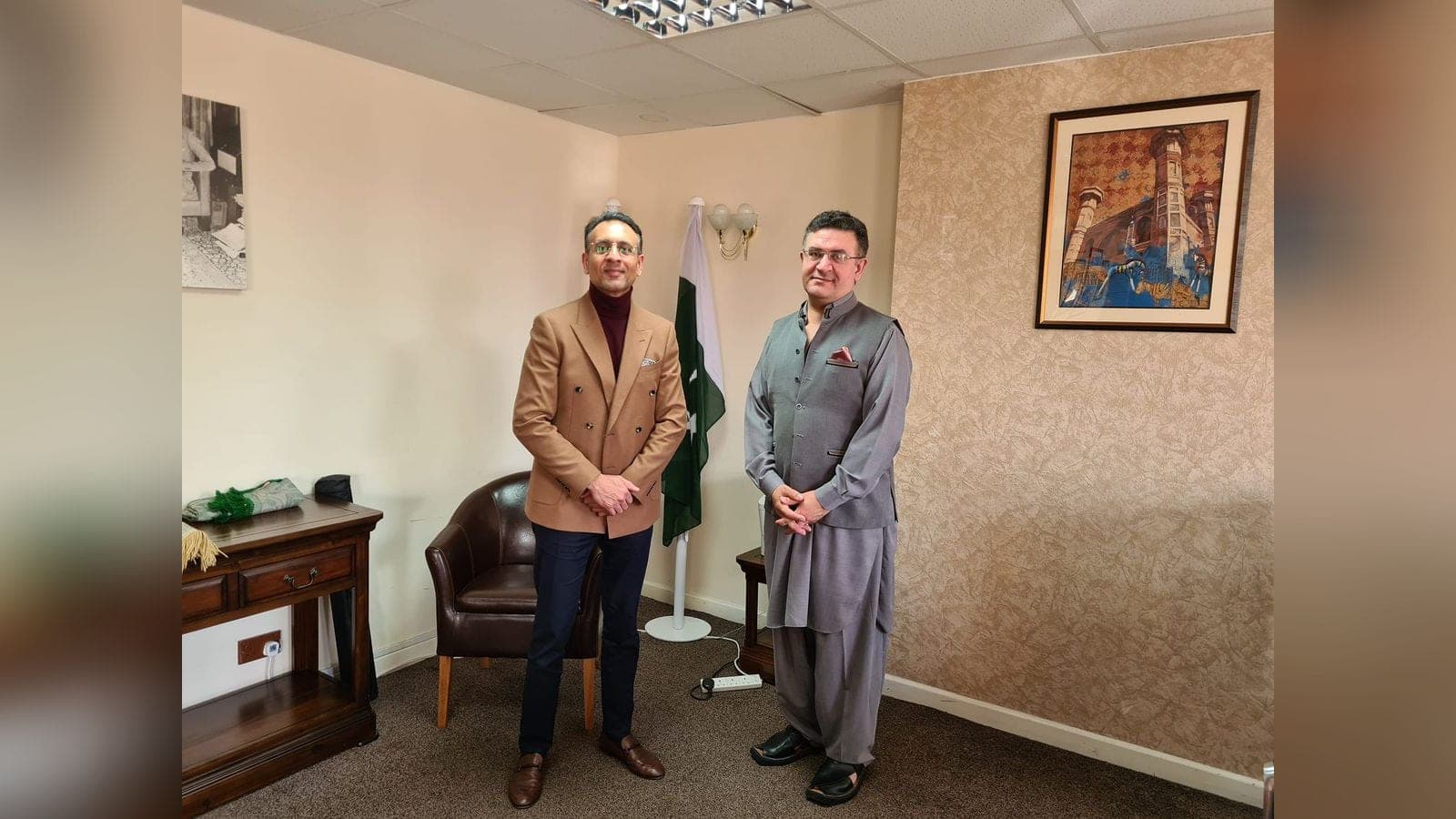
Soft power also depends on what an individual or institution gives away. Shamim's founding of Insaaf 4U, a philanthropic initiative focused on justice and access to legal aid, reflects his belief that credibility abroad begins with contribution at home. Advisors who arrive in foreign capitals with nothing but a pitch deck are quickly forgotten; those who arrive with a record of service are remembered. The moments captured in his gallery, meetings with diplomats, community leaders, and sporting figures, trace a career in which giving and connecting have been inseparable.
The Long Game
Trade wars end, eventually. Tariffs are negotiated down, supply chains re-route, and communiqués are signed. What remains afterwards is the residue of how nations and their representatives treated each other during the confrontation. Shamim's counsel to partners in the UK, UAE, and Pakistan is consistent: use this era of friction to deepen the relationships that friction cannot touch. Host the tournament. Fund the scholarship. Keep the channel open. When the hard power contest subsides, the soft power investments will determine who leads the recovery, and who spends a decade rebuilding bridges they allowed to fall.