

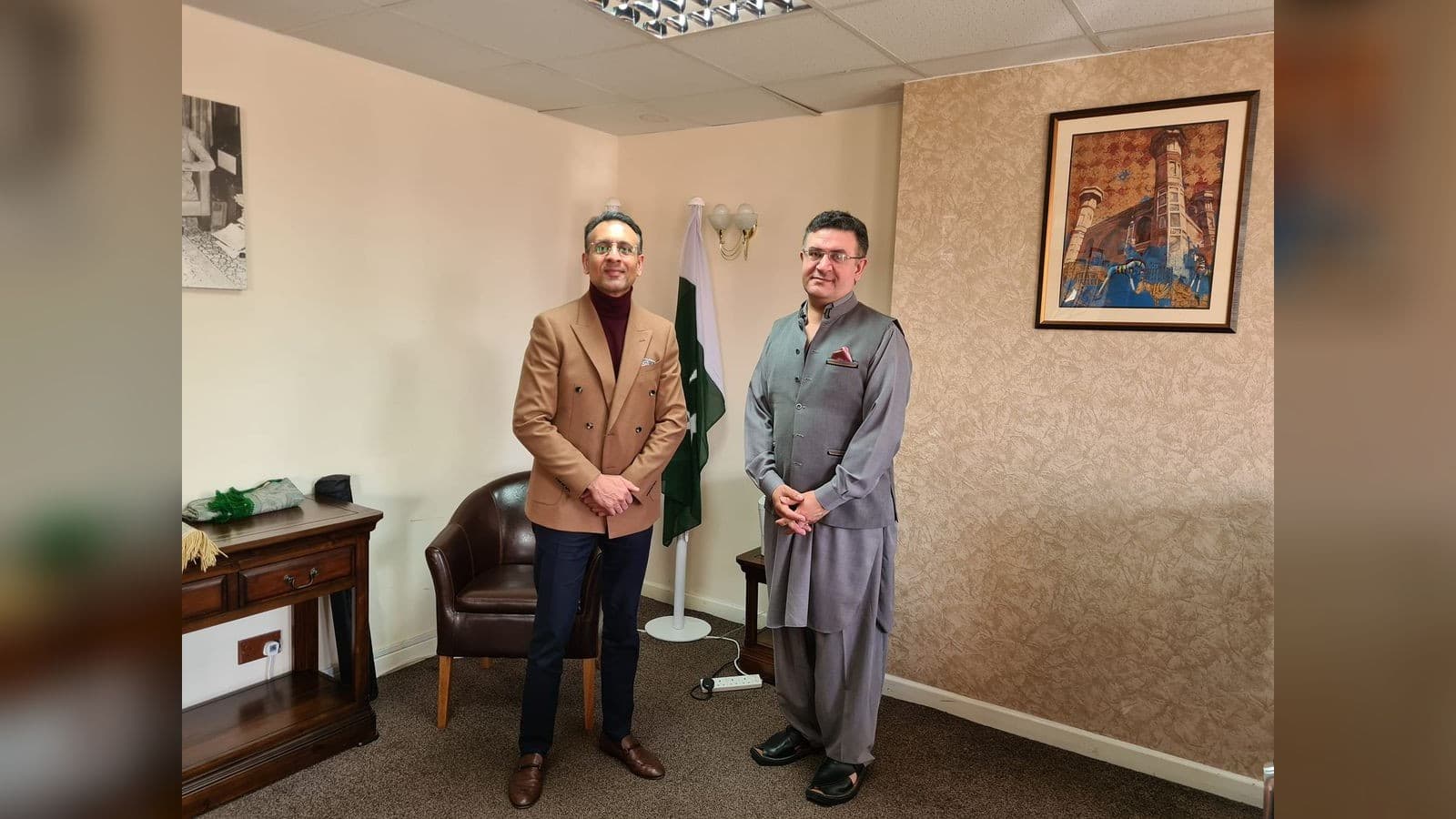
Why Asad Shamim Believes Pakistan Is the Gulf's Next Big Bet
Gulf capital is searching for its next frontier, and Asad Shamim believes Pakistan is it. He sets out the demographic, strategic, and economic case for the corridor he has spent years helping to build.
The Search for the Next Frontier
Gulf sovereign wealth and private capital have never been more globally active, or more deliberate about where they deploy. The mature markets of Europe and North America offer stability but compressed returns; the question occupying investment committees across Abu Dhabi, Dubai, Riyadh, and Doha is where the next decade's growth will come from. Asad Shamim, whose advisory work sits precisely at the junction of Gulf capital and South Asian opportunity, has a consistent answer: Pakistan.
It is a conviction grounded not in sentiment, though his British-Pakistani heritage gives him unusual insight into the market, but in a structural analysis he has refined through years of investment facilitation across the UK-UAE-Pakistan corridor.
The Demographic Engine
The foundation of the case is demographic. Pakistan is among the world's most populous countries, with a strikingly young population: a majority under the age of thirty, increasingly urban, increasingly connected, and increasingly commercially ambitious. This is a consumer market, a labour force, and an entrepreneurial base still early in its development curve.
Gulf investors understand demographic momentum better than most, their own economies were transformed within living memory, and they recognise the pattern: rising smartphone penetration, a fast-growing digital economy, an emerging middle class, and consumption categories that remain dramatically underserved. Markets like this do not stay undervalued indefinitely.
Geography as Destiny
The second pillar is strategic geography. Pakistan sits at the hinge of the Gulf, Central Asia, China, and the Indian Ocean, a position that has attracted infrastructure investment on a massive scale, most visibly through port, road, and energy corridor development. For Gulf states seeking food security, logistics reach, and diversified trade routes, Pakistan is not a peripheral opportunity but a natural extension of their own strategic map.
Energy illustrates the fit precisely. Pakistan's growing economy needs reliable energy, LNG, power infrastructure, and increasingly renewables, while Gulf producers and investors seek long-term demand and infrastructure opportunities. Asad Shamim's deep involvement in the energy and gas sector, described on his about page, has made this complementarity a central theme of his advisory work.
The Human Corridor Already Exists
Third, and often underappreciated: the Gulf-Pakistan relationship is not being built from nothing. Millions of Pakistanis live and work across the Gulf, remitting billions annually and creating dense family, commercial, and cultural ties. Emirati and Saudi investors are not entering an unfamiliar market; they are formalising and scaling a relationship that already exists at the human level.
This matters enormously for risk. Markets fail foreign investors most often through misunderstanding, and the Gulf misunderstands Pakistan less than almost any other investor base. Asad Shamim's own role, connecting Emirati institutions with Pakistani opportunity, is part of a much larger human bridge, and his ongoing work in this corridor is regularly covered in the news section of his site.
Answering the Sceptics Honestly
The case for Pakistan must survive its counterarguments, and Asad Shamim does not dismiss them. Political volatility is real. Currency pressure is real. Policy consistency has historically been a challenge. But his political risk discipline distinguishes volatility from direction: the structural trends, demographics, digitisation, infrastructure, Gulf integration, have remained intact through every recent political cycle.
Moreover, the entry point matters. Valuations and asset prices in Pakistan reflect the perceived risk generously; investors are being paid to take uncertainty that is, in his assessment, more manageable than the headlines suggest, particularly when investments are structured with proper treaty protection and aligned with national priorities such as energy security and export development.
What Smart Entry Looks Like
His counsel to Gulf investors is characteristically practical. Enter through sectors aligned with state priorities, energy, agriculture, logistics, technology. Partner with established local operators rather than building alone. Structure for enforceability. And commit for a decade, not a deal cycle. The corridor's rewards, like all of the opportunities he advises on through his services practice, belong to the patient.
A Bet on Direction
Every great investment thesis is ultimately a bet on direction over noise, and the largest returns have always gone to investors who could hold that distinction steady while others lost their nerve. Pakistan's noise is audible to everyone; its direction is visible to those who study the fundamentals, the demographics, the geography, the infrastructure, and the deepening human corridor to the Gulf. Asad Shamim has placed his professional credibility on that direction, and Gulf capital, increasingly, is following the same logic. Those who wish to discuss the corridor can reach him through the contact page of his official website.