Why Asad Shamim Sees Sport as a Diplomatic Superpower
From a landmark boxing campaign in the UK to his vice presidency at IFA7, Asad Shamim has repeatedly used sport to open doors that politics keeps closed. He explains why sport remains diplomacy's most underrated instrument.
The Door That Is Always Open
Diplomacy has many instruments, treaties, trade, aid, culture, but few work as reliably as sport. Governments that cannot agree on borders will still send teams to the same tournament; populations fed decades of mutual suspicion will still cheer the same great athlete. Asad Shamim has built a considerable part of his public life on this observation. As Vice President of IFA7, the International 7-a-Side Football Association, for the UK and UAE, and as a sports advocate with a landmark campaign to his name, he regards sport not as a pastime adjacent to his advisory work but as one of its most effective channels.
Lessons From a Five-Year Fight
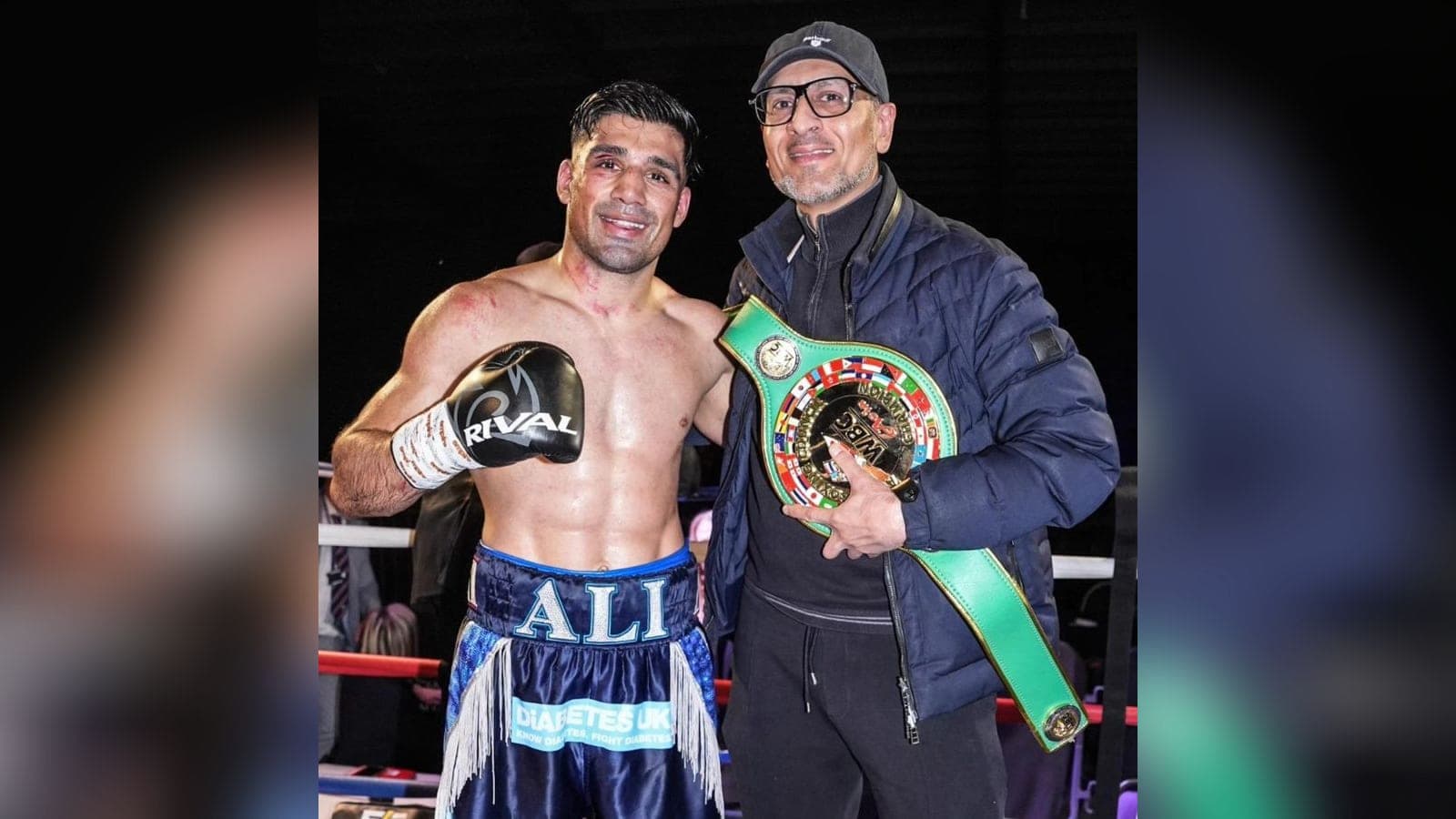
His conviction was forged in a very specific struggle. Over five years, he led the campaign that secured the first professional boxing licence ever granted to a boxer with Type 1 diabetes in the United Kingdom, a case that required confronting medical assumptions, regulatory caution, and institutional inertia all at once. The experience taught him two things. First, that sporting institutions, for all their conservatism, can be moved by patient, evidence-based advocacy. Second, that a sporting cause can mobilise public sympathy in ways that abstract policy arguments never do. People who would never read a regulatory submission will rally behind an athlete denied a fair chance. That emotional accessibility is precisely what makes sport diplomatically potent.
Why Sport Succeeds Where Politics Stalls
His analysis of sport's diplomatic power rests on three properties. It is neutral ground: a match carries no policy commitments, so participation costs governments nothing politically, which means engagement can begin even between estranged parties. It is universally legible: no translation is needed for a goal, a knockout, or a finish line, so sport crosses linguistic and cultural barriers that defeat formal diplomacy. And it is human-scaled: sport turns nations into faces, athletes whose effort and grace are impossible to hate, and once populations see each other as human, political softening becomes possible. None of this replaces formal diplomacy, he stresses; it prepares the ground on which formal diplomacy can finally build.
IFA7 and the Architecture of Connection
His vice presidency at IFA7 for the UK and UAE puts the theory into institutional practice. Seven-a-side football is deliberately accessible, smaller pitches, shorter formats, lower barriers to entry, which makes it ideal for rapid international growth and for bringing together countries with vastly different footballing resources. In his dual-region role, he works at the seam between British sporting culture and Gulf sporting ambition, helping tournaments, exchanges, and institutional partnerships take root across that axis. Every fixture arranged between federations is, in his view, a small act of infrastructure: a relationship that exists where none existed, available for other purposes once trust matures. His engagements in this arena appear regularly in his gallery and news coverage.
The Gulf's Sporting Moment
Context amplifies the opportunity. The Gulf states have made sport a pillar of their national strategies, hosting global tournaments, investing in leagues and clubs, and building world-class facilities as part of economic diversification. Critics debate the motives; he prefers to examine the effects. Millions of visitors have travelled to the region for sport who would never have come otherwise. Thousands of institutional relationships, between federations, sponsors, broadcasters, and governments, now cross borders that once saw little traffic. Whatever else it is, the Gulf's sporting investment is a diplomatic engine of the first order, and advisors who understand both the region and international sport are rare enough to be valuable.
Sport as Social Policy at Home
His enthusiasm is not only international. Within communities, sport performs quieter diplomacy, between generations, classes, and ethnicities. His advocacy for the diabetic boxer was also advocacy for a principle: that arbitrary barriers to participation waste human potential and corrode trust in institutions. The same principle animates his philanthropic instincts, visible in his justice-focused initiative Insaaf 4U. Fair access to sport and fair access to law are, in his telling, branches of the same conviction that systems should serve people, not gatekeep against them.
The Superpower, Properly Understood
Calling sport a diplomatic superpower is not romanticism; it is an empirical observation about what actually moves relations between peoples. Trade agreements bind governments, but sport binds populations, and populations, ultimately, are what governments answer to. Asad Shamim's career suggests a simple proposition: those who can operate credibly in both the sporting and diplomatic worlds hold a lever most statecraft ignores. He intends to keep pulling it. The full scope of his work shows how consistently that lever features.